
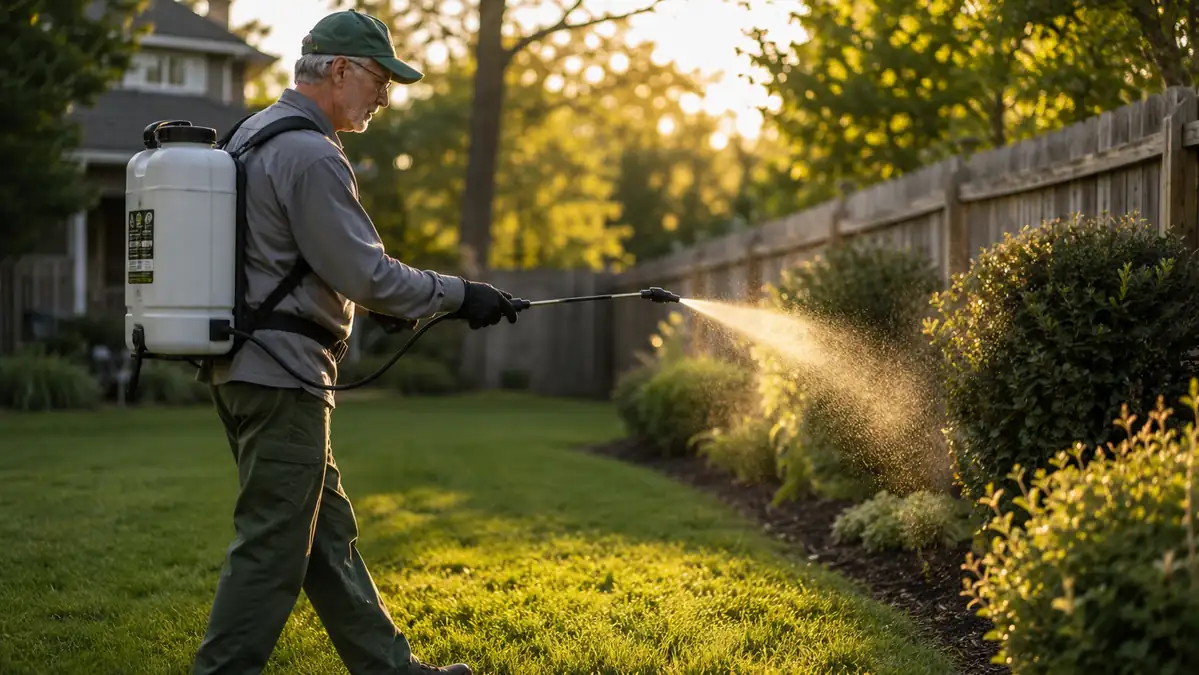
Three summers ago I was still walking my quarter acre with a one-gallon plastic pump sprayer, refilling it four times just to get through a single pass of weed killer down the fence line. My arm ached, the trigger cramped my hand, and half the time it ran dry before I'd covered the back forty feet of lawn. Last spring I finally gave in and bought the Chapin 61500, the four-gallon backpack model with the translucent white tank, and I've used it every week since late March through October.
This isn't a rental unit or a demo I used for a weekend and shipped back. It's the sprayer sitting in my garage right now, with a faint yellow ring inside the tank from a season of copper fungicide on my tomatoes and three rounds of pre-emergent on the lawn. I want to walk through exactly what a full season of real use looked like, because most sprayer reviews online are written after one or two applications, not twenty-four.
Before this one, I'd gone through two cheaper hand pump sprayers in about eighteen months. The first cracked at the base of the trigger handle after a winter in the garage. The second worked fine but held less than a gallon and a half, which meant I spent more time walking back to the hose bib than actually spraying. I bring that up because it's the baseline everything below gets measured against, not some theoretical best case.
The Quick Verdict
A genuinely well-built four-gallon backpack sprayer that earns its keep on anything over a quarter acre. The pump held pressure all season with no rebuild, though the shutoff valve needed a drop of silicone grease around week 14.
Amazon Check Today's Price →Tired of Refilling a Hand Sprayer Four Times Per Pass?
The Chapin 61500 holds four gallons, which for most yards means one fill instead of four. Check today's price and current availability on Amazon before your next treatment.
Amazon Check Today's Price on Amazon →How I've Used It: A Full Season, Not a Weekend Test
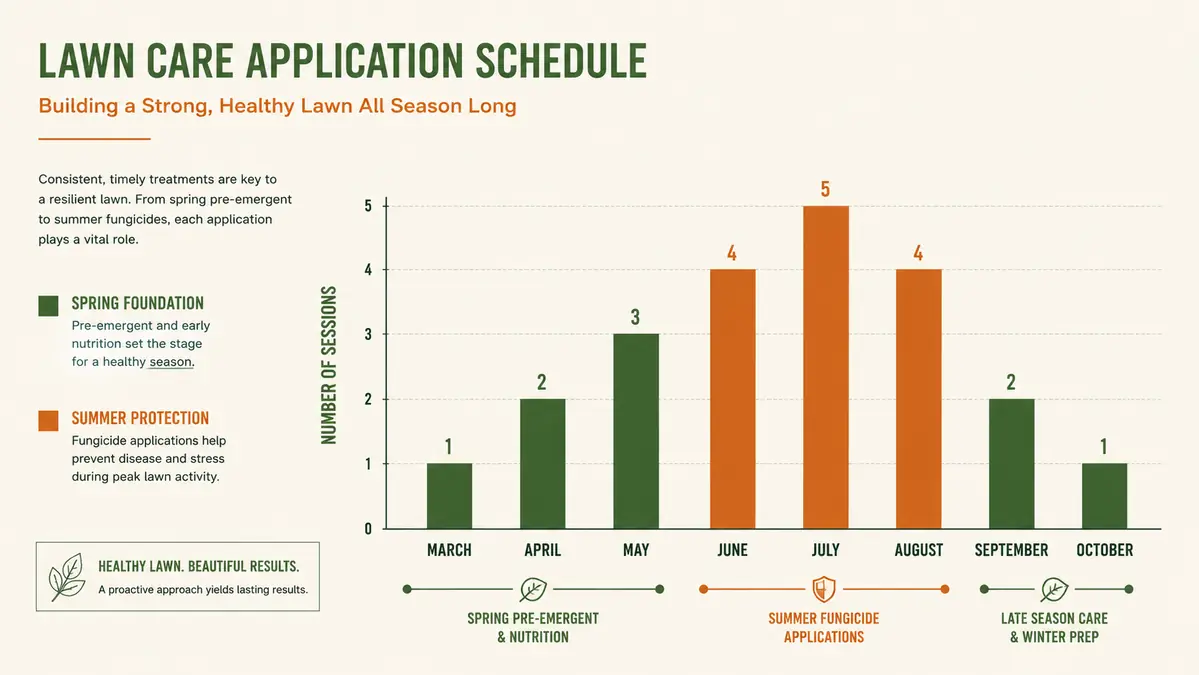
I run a fairly typical suburban lot, a little under a quarter acre with a strip of lawn in front, a bigger stretch in back, six raised garden beds, and a row of arborvitae along the property line. Starting the last week of March, I used it every Saturday morning for pre-emergent, then switched to spot treatments for dandelions and clover through May, then rotated between liquid fertilizer and copper fungicide on the tomatoes and peppers from June through August. By the time I put it away for winter in late October, I'd run it through roughly 24 separate sessions.
That's the kind of use that actually tells you something about a sprayer. A single afternoon with a rental unit will tell you whether the trigger feels nice in your hand. It won't tell you whether the pump seals start leaking after eight weeks, whether the tank cap cracks in the sun, or whether straps that felt fine on day one start digging into your shoulders on hour two of an all-day project.
Most of my mixes were on the lighter end, a couple ounces of concentrate per gallon for fertilizer and weed control, closer to full strength for the fungicide sprays in July when leaf spot showed up on the tomatoes. The four-gallon capacity meant I could mix a full batch of whatever I needed for the day, run the whole property in one pass, and rinse the tank once instead of mixing three separate small batches and rinsing three times.
The short version is that the Chapin held up better than I expected for a sprayer in this price range, and noticeably better than the two cheaper models I went through before it.
The 2-Stage Filtration System, and Why It Mattered More Than I Expected
I didn't think much about the filtration system when I bought it. Every listing on Amazon mentions filtration, so it's easy to skim past. But after the second week of pumping well water with some sediment in it through a cheap pump sprayer and watching the nozzle clog every ten minutes, I paid attention to it this time.
The design uses a filter in the fill opening and a second one at the base of the wand, right before the nozzle. In practice that means grit and debris get caught twice before they ever reach the tip. I clogged the nozzle exactly twice all season, both times because I mixed a fertilizer concentrate too thick and didn't strain it first, not because of anything in my water supply.
Cleanup at the end of a session is a routine now: run a gallon of clean water through the tank and wand, pull the fill filter and rinse it under the hose, and let everything air dry with the cap off overnight. It takes maybe five minutes and it's the reason I still haven't had to replace a nozzle tip after a full season.
It's a small thing, but it's the difference between a ten-second wand rinse and stopping the whole job to unscrew a nozzle tip with wet, chemical-covered hands.
Comfort Over a Full Season: Straps, Pump Arm, and My Shoulders
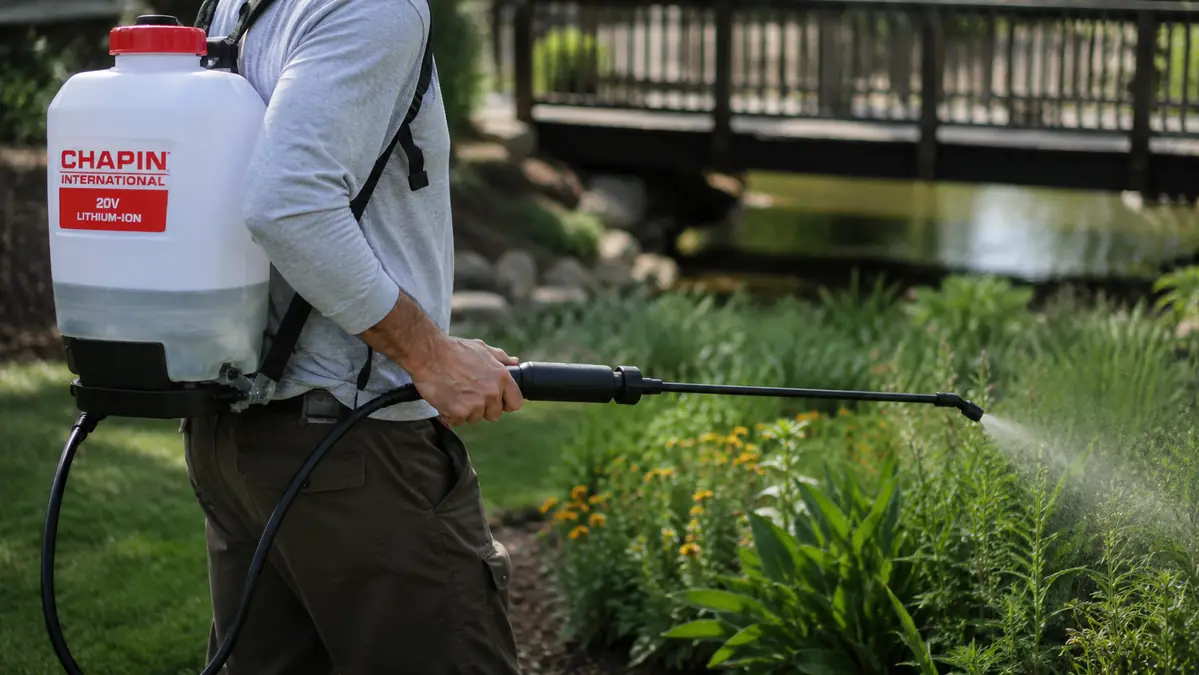
A four-gallon tank full of water and chemical weighs around 35 pounds when it's topped off. That's not nothing, and it's the part I was most skeptical about before buying. I've used cheap backpack sprayers before where the straps were basically an afterthought, thin webbing that rolled and dug in within twenty minutes.
The padded straps on this one are wide, adjustable in four places, and they held their shape all season. I'm 5'10", about 175 pounds, and I can comfortably wear a full tank for 30 to 40 minutes before I want a break, which for my property is enough to finish a full pass without stopping.
There's also a waist strap that I ignored the first few sessions and started using in May once the tank got heavier with fertilizer mix. It shifts a good amount of the weight off my shoulders and onto my hips, which makes a real difference by the third or fourth pass down the fence line. If your sprayer doesn't have one, or you're not using the one it came with, that's worth fixing before you blame the shoulder straps.
The pump arm sits on the left side, mounted low enough that I can keep pumping while walking without breaking stride. After a full season it's a little looser than it was on day one, maybe 10 percent more play in the handle, but it hasn't affected the pressure I'm getting out of the wand.
Fan Tip Versus Cone Tip: What I Actually Used
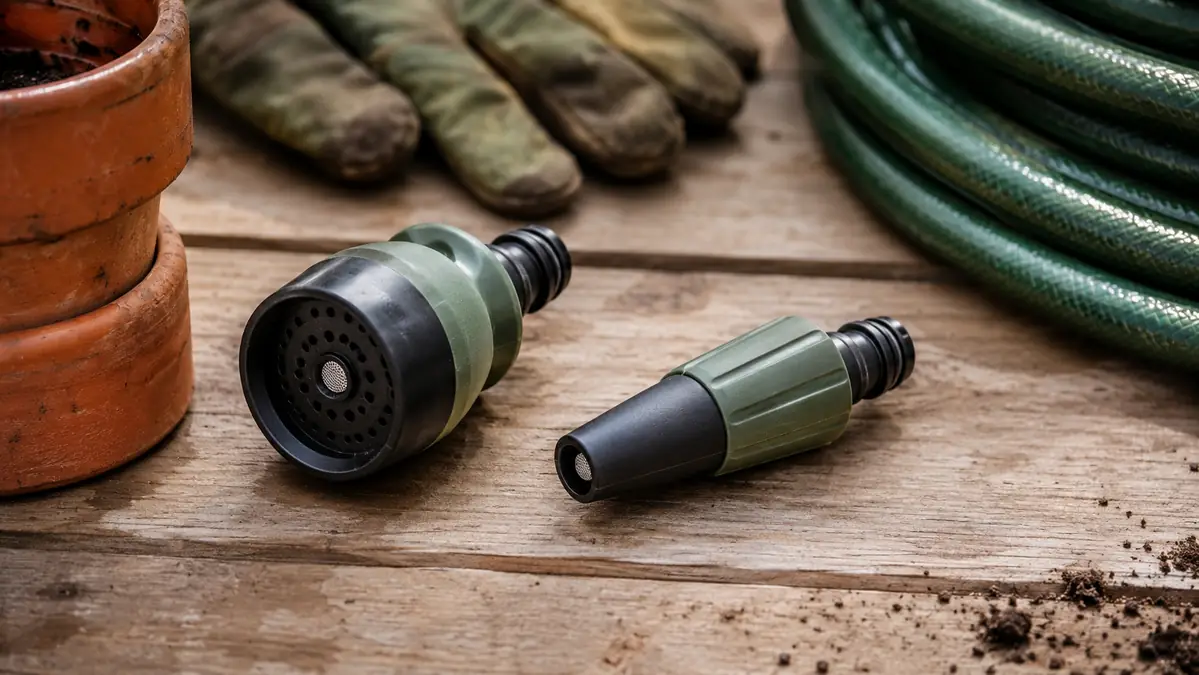
The sprayer ships with both a poly fan nozzle and a cone nozzle, and I'll be honest that I used the fan tip probably 90 percent of the time. For broad lawn coverage, pre-emergent, and fertilizer, the fan pattern gives you an even, wide swath and it's much harder to leave stripes or overlap gaps than with a narrow stream.
The cone tip earned its keep on the tomatoes and peppers, where I wanted a tighter, more directed spray to hit the undersides of leaves for fungicide without soaking the whole bed. Switching between the two takes about fifteen seconds, no tools needed.
The shutoff valve at the base of the wand has a cushioned grip, and it's genuinely easier on the hand than the sprayers I used before. My only note is that around week 14 it started to weep a little at the seal, a slow drip when the tank was under full pressure. A drop of food-grade silicone grease on the O-ring fixed it, and it hasn't come back since.
The two-stage filtration system is the one feature I didn't think I'd care about, and it's the one I'd miss most if I went back to a cheaper sprayer.
What Held Up After 24 Sessions, and What Didn't
The tank itself shows no cracks, no discoloration beyond the fungicide staining I mentioned, and the translucent sides still let me read the fill level clearly, which matters more than I expected when you're mixing concentrates and need to hit a line accurately.
The pump mechanism is the part I watched closest, since that's usually the first thing to fail on a budget sprayer. Twenty-four sessions in, it still builds pressure the same way it did in March. No soft spots, no loss of resistance in the stroke.
What didn't hold up quite as well: the small plastic clip that holds the wand to the side of the tank for storage snapped off in June. It's a minor part and doesn't affect spraying at all, I just tuck the wand under one of the shoulder straps now. And that shutoff valve weep I mentioned needed the one bit of maintenance the whole season.
Before I put it away for the winter, I ran a full tank of clean water through it, left the cap and drain open to dry completely, and stored it upright on a shelf rather than laying it on its side. That's more about protecting the investment than anything the sprayer demands, but a tool that's this useful is worth the extra five minutes of off-season care.
For a sprayer that's spent a full growing season getting knocked around in a garage and dragged through wet grass, the Chapin's failure list is short enough that I'd buy it again without hesitation.
Alternatives I Considered Before Buying
Before landing on this one I looked hard at a couple of cheaper 2-gallon hand pump sprayers, the kind you carry at your side rather than wear. They're lighter and less expensive, but for anything over a small garden bed, you'll be refilling constantly, and carrying the weight in one hand instead of on your back is rougher on your lower back over a long session.
I also looked at battery powered backpack sprayers, which trade the manual pump arm for a rechargeable motor. They're less physical work in the moment, but I didn't love the idea of a battery dying halfway through a job, and the models I compared in a similar price range had worse reviews on pump longevity than this manual one.
A tow-behind sprayer that hooks to a riding mower crossed my mind too, since it takes the weight off your back entirely. I ruled it out fast once I actually measured my lot. Those units make sense on an acre or more with wide open turning room. On a quarter acre with raised beds and tight corners around the arborvitae, a wheeled unit would have spent more time getting stuck than spraying.
What I Liked
- Two-stage filtration meant I only clogged the nozzle twice all season, both my own fault
- Padded, adjustable straps stayed comfortable through 30 to 40 minute sessions with a full 4-gallon tank
- Translucent tank makes it easy to read the fill line when mixing concentrate
- Pump held consistent pressure across 24 sessions with no rebuild needed
- Switching between the fan and cone nozzle takes seconds, no tools required
Where It Falls Short
- Shutoff valve developed a slow weep around week 14, needed a drop of silicone grease on the O-ring
- The plastic wand storage clip snapped off after about three months of use
- At roughly 35 pounds full, it's still a workout on hilly ground
- Left-side pump arm placement takes a session or two to get used to if you're right-handed
Who This Is For
This sprayer makes the most sense if you've got somewhere between a quarter acre and a full acre to cover, or if you're doing regular applications, weekly or biweekly, rather than a once-a-season treatment. If you're mixing fertilizer, pre-emergent, fungicide, or a broadleaf weed killer more than three or four times a year, the four-gallon capacity and the padded straps pay for themselves in time saved and shoulders spared. It's also a solid pick if you're tired of a hand sprayer running dry mid-pass and want to actually finish a job in one trip.
Who Should Skip It
If you've got a small yard or a handful of raised beds and you spray twice a season, a one or two gallon hand pump sprayer will do the job for less money and less storage space. And if carrying 35 pounds on your back isn't something your body can handle right now, it's worth looking at a wheeled or battery powered option instead, even if it costs more up front. There's no version of this sprayer that gets around the basic physics of a full tank on your shoulders.
Ready to Stop Refilling a Hand Sprayer Every Ten Minutes?
The Chapin 61500 four-gallon backpack sprayer is available today on Amazon. Check current pricing and availability before your next application.
Amazon Check Today's Price on Amazon →