
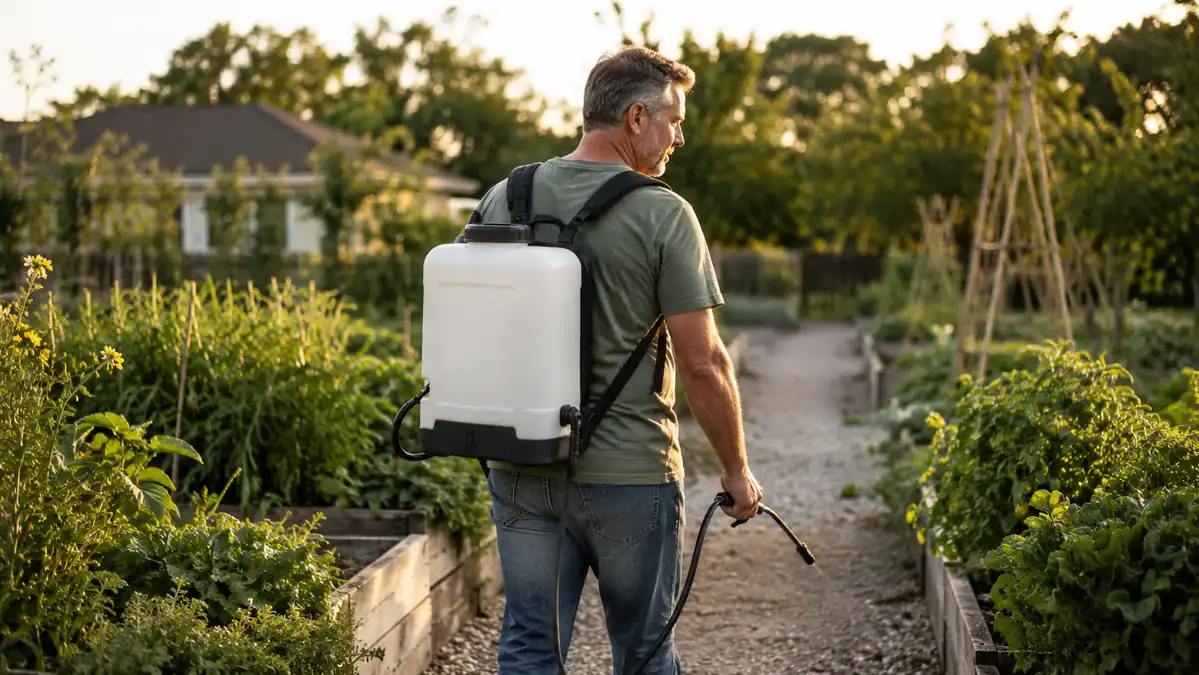
I've lost count of how many times I've hauled the Chapin 61500 backpack sprayer out of the garage this year, but the shoulder straps tell the story on their own. They've gone from stiff and glossy to soft and creased in exactly the spots where my shoulders sit. I bought it two seasons ago after my wrist finally gave out from squeezing a handheld pump sprayer trigger a few hundred times in a single afternoon, and I've since put this thing through more than fifty fill-ups. Lawn weed control, fence-line brush killer, tomato fungicide, liquid fish emulsion, you name it, it's gone through that four-gallon tank.
So this isn't a first-week, everything-smells-like-new-plastic review. This is what's actually true about the Chapin after the honeymoon phase wore off. I'm going to tell you where it earned its keep and where it annoyed me, because a sprayer you use fifty times a year needs to be judged on fill-up forty-something, not fill-up one. I'll also tell you the small stuff nobody puts in a five-star Amazon review, the drips, the maintenance, and the one part I've had to order twice.
The Quick Verdict
A genuinely durable, comfortable-to-wear sprayer that does the job well, but it's not flawless, and the small annoyances are worth knowing before you buy.
Amazon Check Today's Price →Still squeezing a handheld trigger until your hand cramps up?
The Chapin 4-Gallon Backpack Sprayer turns an afternoon of trigger-squeezing into a few easy pumps of your arm every fifteen feet. See today's price and current availability on Amazon.
Amazon Check Today's Price on Amazon →How I've Come to Rely on It
My yard isn't huge, roughly a third of an acre with a vegetable garden, a row of raised beds, and a fence line that borders a field full of Canada thistle and bindweed that migrates over every spring whether I invite it or not. Before the Chapin, I was using a one-gallon handheld pump sprayer that meant three or four refill trips just to get through a single treatment session. The math on the backpack version is simple: four gallons on my back instead of one gallon in my hand means I can cover the whole property on a single fill, and that alone changed how often I actually got the spraying done.
The pump handle sits on the right side and works with a smooth up-and-down motion, nothing fussy about it. A few strokes builds enough pressure to spray for ten or fifteen feet of steady coverage before you need to pump again, and you can keep walking and spraying while you do it. That's the real advantage over a handheld unit. You're not stopping every few feet to squeeze a trigger a dozen times just to get pressure back.
I've used it for pre-emergent herbicide in early spring, spot treatments on driveway cracks, a copper fungicide rotation on my tomatoes through a wet July, and enough diluted fish emulsion that the tank has smelled faintly of it more than once no matter how well I rinse it. It has never once refused to work, which after fifty-plus fill-ups is not nothing.
What surprised me most is how little the pressure output has fallen off. I timed myself early on, roughly a minute and a half of steady spraying from six pump strokes, and I checked again recently for this review. It's closer to seventy seconds now, a modest drop, but not the kind of falloff that makes you feel like you're babying an old, tired machine. Most of that difference is probably me pumping a little less enthusiastically than I did the first month, if I'm being honest.
The Pump and the Seals: What Nobody Tells You
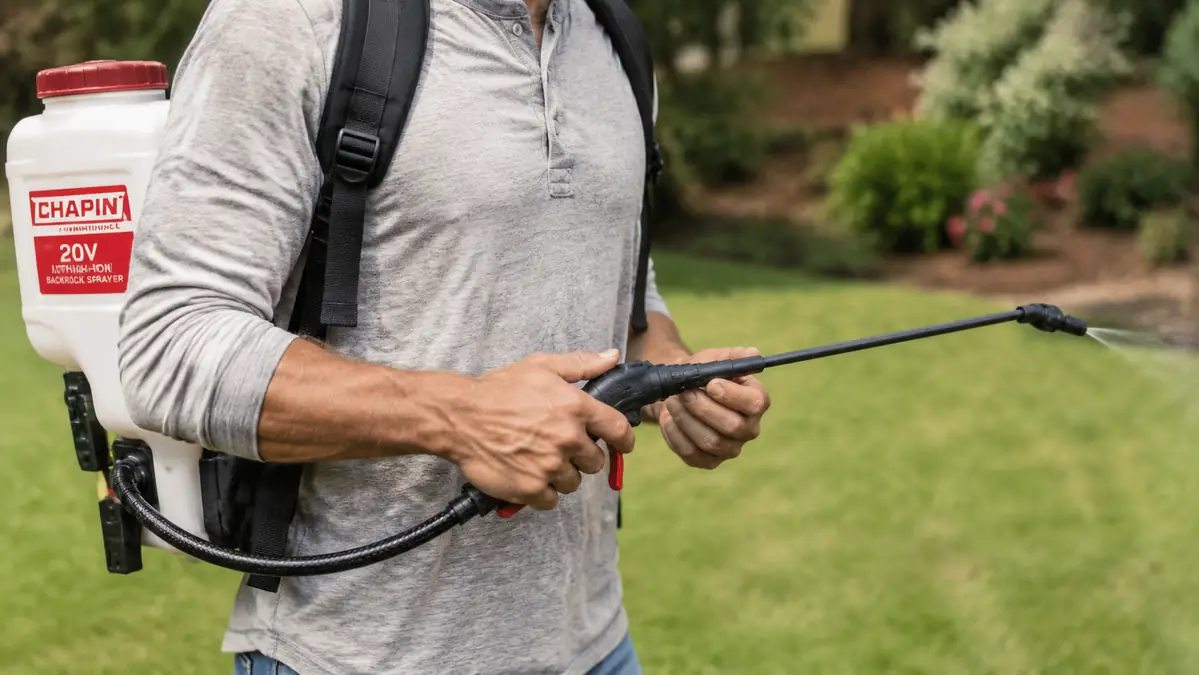
Here's the part most reviews skip past. The pump mechanism on the Chapin is genuinely solid, but the seals around the pump shaft are the piece I keep an eye on now. About eight months in, I noticed a faint mist of liquid escaping around the pump handle when I was pressurizing the tank, not a leak exactly, more of a weep. It didn't stop the sprayer from working, but it was enough that I looked it up and found I'm not the only owner who's dealt with it. A light coat of food-grade silicone grease on the pump piston seal fixed it, and it's held since, but that's maintenance the box doesn't mention.
The cushion grip shut-off valve on the wand is the other place I've had to pay attention. It's comfortable, my thumb doesn't ache after a long session the way it did with my old handheld sprayer, but after enough fill-ups the shut-off started to drip a few drops when fully closed rather than cutting off clean. It's a two-dollar rubber gasket fix if you order the replacement parts kit, and Chapin does sell parts for this thing, which matters more than people realize. A sprayer you can't repair is a sprayer you eventually throw away.
None of this is a dealbreaker. It's the honest difference between a sprayer that's brand new in the box and one that's been strapped to a working gardener's back for a season and a half. If you baby it, rinse it after every use, and don't leave concentrated chemical sitting in the tank overnight, you'll likely go longer than I did before you notice any weeping at the seals.
I've also learned the hard way that letting anything sit in the tank between uses is a mistake, even plain water. I left about a half gallon of diluted herbicide in there over a rainy week once, meaning to finish the job the next day, and came back to find the residue had made the internal gasket a little tacky. It still worked fine after a thorough rinse and a few pump cycles of clean water, but it taught me to always empty and flush the tank the same day, no exceptions.
The Nozzle and Spray Pattern After Dozens of Fill-Ups
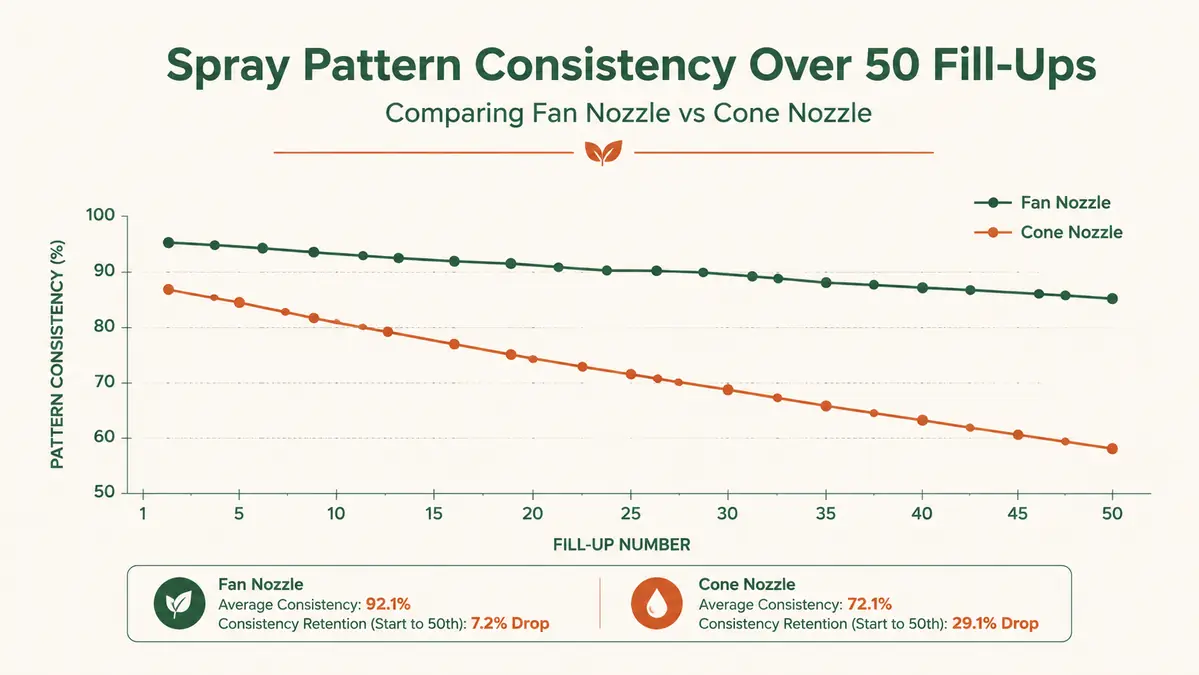
The Chapin ships with poly fan and cone nozzle tips, and I switch between them depending on the job. The fan nozzle is what I reach for on lawn weed treatments, it lays down a wide, even band that makes it easy to walk a straight line without leaving gaps or doubling up. The cone nozzle is better for spot spraying, individual weeds in the driveway, or a targeted shot of fungicide on a specific tomato plant that's showing early blight.
Where I've noticed some drift over time is spray pattern consistency with certain products. Anything with a higher oil content, like some horticultural oils I've used for scale insects, tends to leave a slightly gummy residue on the fan nozzle's fine slot over repeated uses. It doesn't clog completely, but the pattern gets a little less even until I take five minutes to clean the tip with an old toothbrush and warm water. Water-based herbicides and fertilizers have never given me this problem, only the oilier stuff.
The wand itself extends far enough that I'm not hunched over reaching for low weeds, and the brass shut-off connection has never loosened or cross-threaded on me, which I can't say about the plastic fitting on my old handheld unit. Overall the spray pattern after fifty-plus fill-ups is still close to what it was on day one, provided you rinse the nozzle after anything oil-based.
One small thing worth mentioning, since it caught me off guard the first time: the poly nozzle tips are held on with a simple threaded collar, and if you crank them too tight with wet hands they can be a pain to loosen next time you want to swap between fan and cone. I keep a rag nearby now just for that. It's a minor annoyance, not a design flaw, but it's exactly the kind of thing you only learn after you've swapped nozzles thirty or forty times.
The Two-Stage Filtration System, Tested With Actual Debris
This is the feature that gets buried in the marketing copy but matters more than people expect. There's a filter basket right at the fill opening, and a second filter down at the shut-off valve where the wand connects. I fill from an outdoor rain barrel sometimes, which is not exactly pristine water, and the first-stage filter has caught leaf debris, a couple of tiny bugs, and enough sediment that I clean it out every three or four fills without fail.
The second filter at the wand is the one that actually saves you from a clogged nozzle mid-job, and in a year and a half of use I've had exactly one clog that made it past both filters, and that was my own fault for not straining a batch of homemade fertilizer tea before pouring it in. For premixed commercial herbicides and fertilizers straight out of the jug, the two-stage system has done its job every single time.
If you're someone who mostly fills from an outdoor spigot with municipal water, you'll probably never think about the filtration system at all, and that's fine, it's doing quiet work in the background. Where it pays off is exactly the situation I put it through, rain barrel water, homemade compost tea, and the general mess of a working garden, and it's held up better than I expected it to.
What I Liked
- Four-gallon tank cuts refill trips down dramatically compared to a handheld sprayer
- Smooth, low-effort pump handle that doesn't fatigue your arm over a long session
- Two-stage filtration genuinely prevents most nozzle clogs, even with rougher water sources
- Padded, adjustable straps stay comfortable even on a full tank
- Replacement parts are actually available, so the sprayer is repairable instead of disposable
Where It Falls Short
- Pump shaft seal can develop a light weep after many months of regular use
- Cushion grip shut-off may start dripping slightly once the internal gasket wears
- Fan nozzle pattern gets uneven with oil-based products until you clean the tip
- Full four-gallon tank is heavy, close to 35 pounds, noticeable on a long slope or hill
A sprayer you use fifty times a year needs to be judged on fill-up forty-something, not fill-up one, and on that measure the Chapin has earned its spot in my garage.
Who I'd Recommend It To (and the Alternatives I Considered)
Before I bought the Chapin, I looked hard at a couple of cheaper battery-powered backpack sprayers that promised to do the pumping for you. I passed on them for two reasons. First, batteries die at the worst moment, usually halfway across the yard, and I didn't want to be tethered to a charging schedule. Second, the reviews on those units were full of complaints about the internal pump motor burning out within a season, which is exactly the kind of failure you can't fix with a two-dollar gasket. Manual pumping is more effort, but it's also the part least likely to break.
I also tried a smaller two-gallon backpack unit from a different brand for about a month before returning it. The tank size felt like a compromise that solved nothing, still too heavy to be comfortable, but not big enough to actually save me trips compared to the four-gallon Chapin. If you're going to strap a tank to your back at all, you might as well get the capacity that makes it worth doing.
I even considered a wheeled cart sprayer, the kind you tow behind a mower or drag along yourself, and it's a fine option for a flat, wide-open lawn. My property has raised beds and a sloped side yard, though, and a cart would have gotten stuck or tipped more than once. The backpack format just fits the terrain I actually have, and that's worth thinking about before you assume bigger and wheeled automatically beats strapped-to-your-back.
Where the Chapin makes the most sense is for anyone with more than a small patio's worth of yard, someone who treats their lawn or garden on a recurring schedule rather than once a year, and someone who doesn't mind doing five minutes of rinse-and-maintenance after each use in exchange for a sprayer that keeps working season after season.
Who This Is For
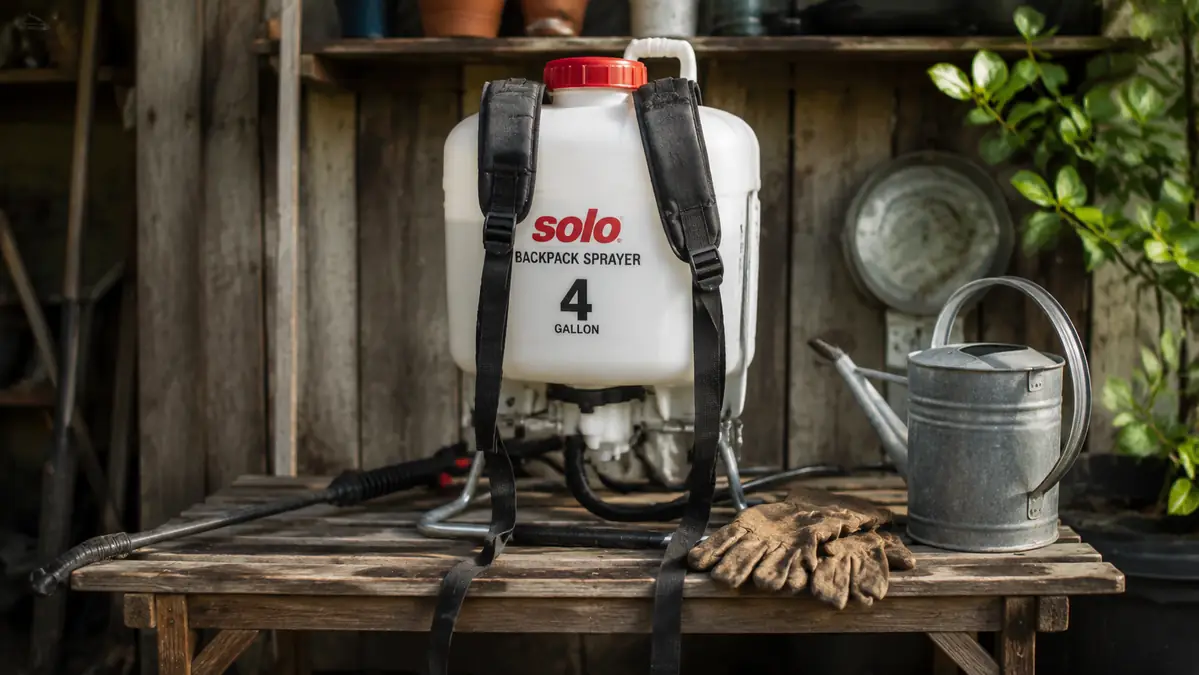
This sprayer is built for the gardener who's tired of babysitting a handheld bottle, the homeowner with a half-acre or more who does regular lawn weed treatments, fence-line brush control, or a rotating fungicide schedule on vegetables and fruit trees. If you're already mixing your own herbicide or fertilizer solutions and refilling more than once per session with a smaller sprayer, the jump to a four-gallon backpack unit like the Chapin will save you real time, and your wrist will thank you.
Who Should Skip It
If you've got a small container garden, a patio full of pots, or a tiny yard where a one-quart spray bottle already gets the job done in under five minutes, a four-gallon backpack sprayer is overkill you'll never fully use. It's also not the right pick if you have back or shoulder issues that make carrying 35 pounds of weight uncomfortable, since a full tank does have real heft to it. In that case a smaller handheld or a wheeled cart sprayer will serve you better.
Fifty fill-ups in, it's still the sprayer I reach for first.
If your yard is bigger than a patio and you're done refilling a handheld bottle every ten minutes, check today's price on the Chapin 4-Gallon Backpack Sprayer on Amazon.
Amazon Check Today's Price on Amazon →