
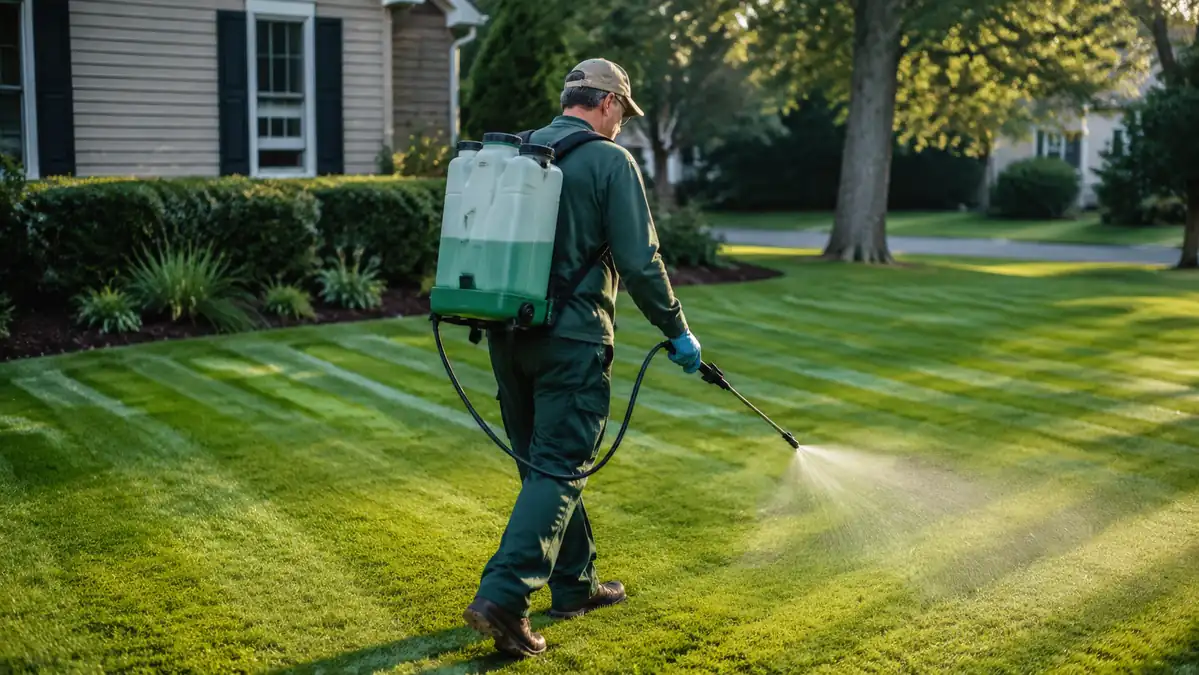
If you've ever walked away from spraying a yard full of dandelions only to watch half of them shrug off the herbicide two weeks later, you already know the problem usually isn't the weed killer. It's the pattern. A backpack sprayer holds four gallons and a lot of promise, but if you walk too fast, hold the wand at the wrong angle, or never bother calibrating the nozzle, you end up with streaky bands of dead grass next to patches of weeds that barely got wet. I've made every one of these mistakes myself, usually within the first two hours of a Saturday.
The fix isn't a different chemical, it's a system. Mix the right concentration, calibrate the flow rate for your walking speed, and use an overlap pattern so every square foot gets an even pass. I run a Chapin 4-gallon backpack sprayer, and once I started calibrating it before every job instead of just pumping and walking, my coverage got noticeably more consistent and I stopped re-treating the same patches three weeks in a row. Here's the exact process, step by step.
Streaky Coverage Wastes Herbicide, Not Just Time
A reliable tank and a consistent nozzle are half the battle. See today's price on the 4-gallon Chapin backpack sprayer I use for this method.
Amazon Check Today's Price on Amazon →One more thing before you get started: gloves and eye protection aren't optional, even for a routine weekend treatment. Herbicide concentrate is far stronger than the diluted spray you'll be walking around in, and most of your exposure risk happens during mixing, not during application. I keep a pair of nitrile gloves clipped to the strap of my backpack sprayer so I'm never tempted to skip them because they're inside somewhere and I'm already outside ready to go.
Step 1: Mix Your Herbicide to the Right Ratio Before It Touches the Backpack Sprayer
Every herbicide label lists a mixing ratio, and it's usually printed in fine text you have to actually search for. Glyphosate concentrates, for example, often call for somewhere between 1.5 and 3 ounces per gallon depending on the product strength and the weed you're targeting. Find that specific number before you touch the tank lid, because guessing here is where most uneven coverage problems actually start, long before the nozzle ever gets involved.
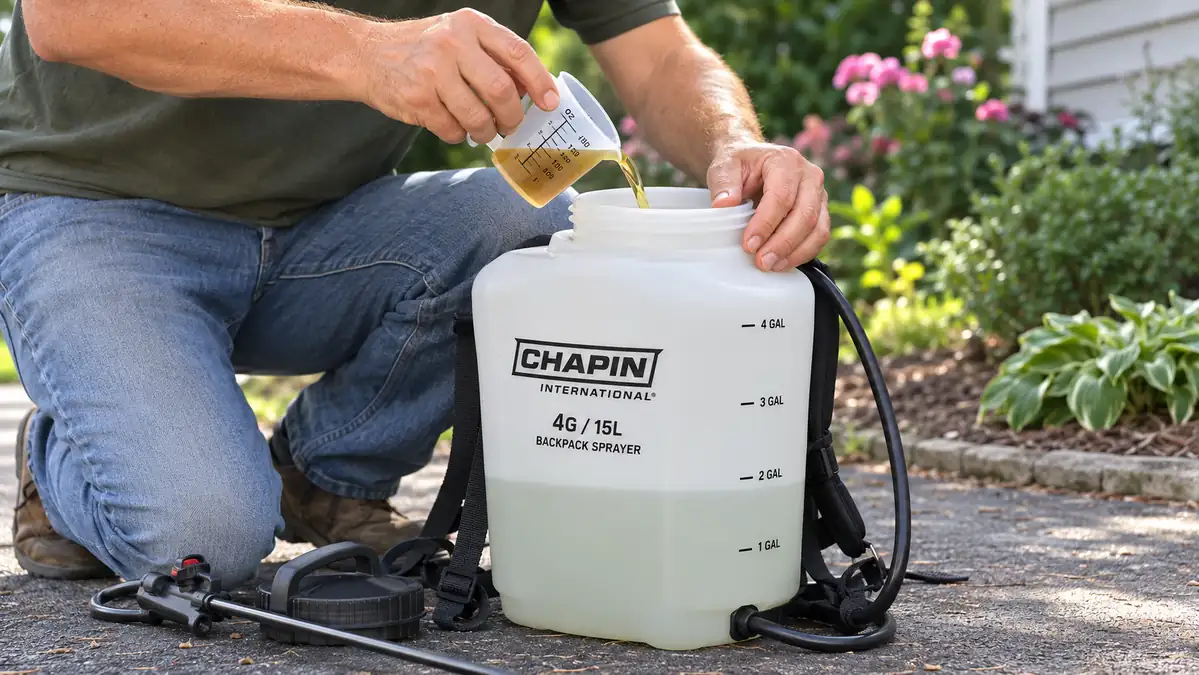
Fill the tank with about half the water first, add your measured herbicide, then top off with the rest of the water before closing the lid. Mixing concentrate into a nearly full tank means it settles unevenly, and you end up spraying a stronger dose in the first few minutes and a weaker one toward the bottom of the tank. The gallon marks printed on the side of a translucent tank make this easy to eyeball without a separate measuring jug.
If you're spot-treating cracks in a driveway or a scattered patch of thistle rather than blanketing a whole lawn, mix a smaller batch instead of filling all four gallons out of habit. Left-over mixed herbicide doesn't store well in the tank, and topping off a half-used batch with more concentrate the next weekend throws off your ratio all over again. I keep a one-gallon pitcher just for small spot jobs so the backpack sprayer stays reserved for full-yard treatments.
Step 2: Calibrate Your Backpack Sprayer's Output Before You Walk the Yard
A backpack sprayer's output depends on how hard and how often you pump, which is exactly why two people using the identical tank can get completely different coverage from the same amount of herbicide. Before you walk a single row, run a 30-second calibration test: pump to working pressure, hold the wand at a fixed height over a bucket or a bare patch of driveway, and squeeze the trigger for exactly 30 seconds while catching the output. Measure what came out in ounces.
Most fan-tip nozzles on a 4-gallon backpack sprayer put out somewhere between 12 and 20 ounces a minute at normal pumping pressure, though yours may run higher or lower depending on the tip size installed. Once you know your number, you can work out how many square feet a full tank actually covers at your target application rate instead of guessing and running dry halfway across the yard.
This is also where you catch a clogged or worn nozzle before it wastes a whole tank of concentrate. On the Chapin sprayer I use, the poly cone nozzle is inexpensive enough to just swap for a fresh one each season rather than fighting an inconsistent spray pattern all summer. A ten dollar part is cheaper than a tank of wasted herbicide.
Write your calibration number down somewhere you'll actually see it again, whether that's a piece of tape on the tank or a note on your phone. Nozzles wear over time and output creeps up as the orifice erodes, so a number from two seasons ago isn't reliable anymore. I re-check mine at the start of each spring before the first treatment, and again anytime I swap to a new nozzle tip.
Step 3: Set a Consistent Walking Speed and Wand Height
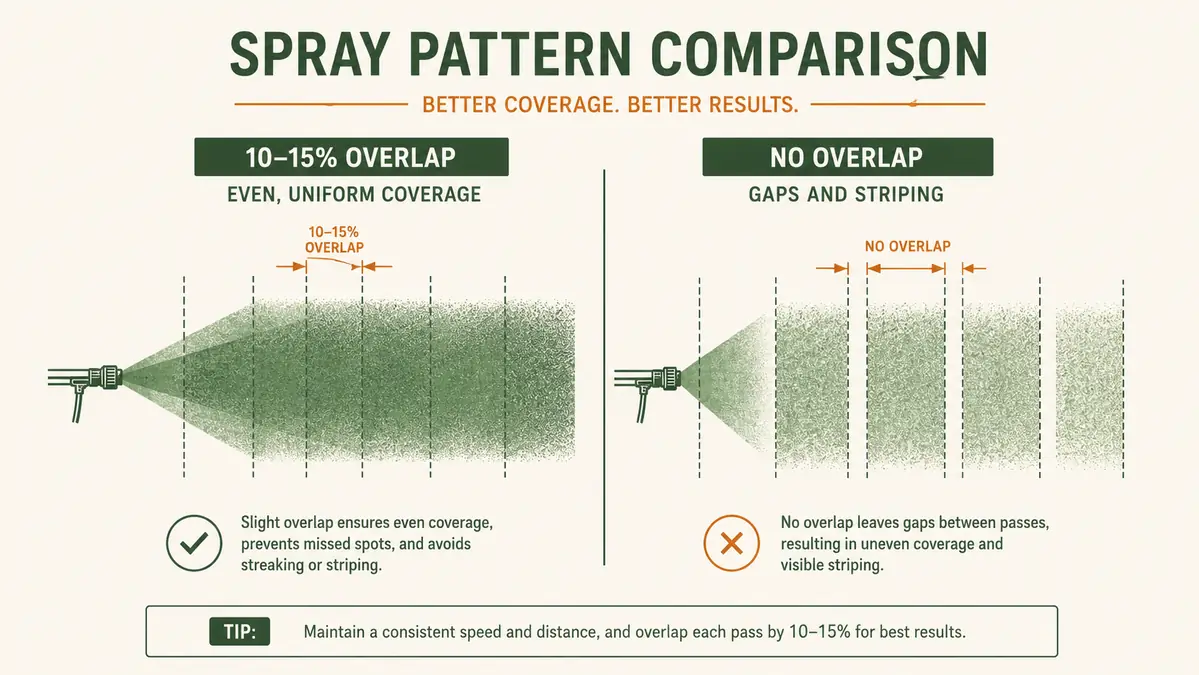
Match your walking pace to whatever speed you used during calibration, not faster. It's tempting to speed up once you're actually out there treating dandelions in the heat, but a faster pace means less herbicide lands per square foot even though your pump rate hasn't changed. I aim for a steady, unhurried walk, roughly the pace you'd use pushing a loaded wheelbarrow across soft ground.
Hold the wand tip about 18 to 20 inches above the target vegetation and keep that height constant as you move. Swinging the wand up and down changes your spray pattern's width without you noticing, which is exactly how you end up with a wavy stripe of dead weeds next to a stripe that barely got touched. Keep your arm steady and let your legs do the moving instead of your wrist.
Pay attention to how you handle the ends of each row too. It's easy to release the trigger a beat late while turning around, which dumps an extra dose right at the turnaround point and leaves a dark, over-treated stripe across the lawn. Release the trigger a step before you plan to turn, then re-engage it once you're squared up and moving in the new direction.
Step 4: Use the Overlap Method to Avoid Gaps and Streaks
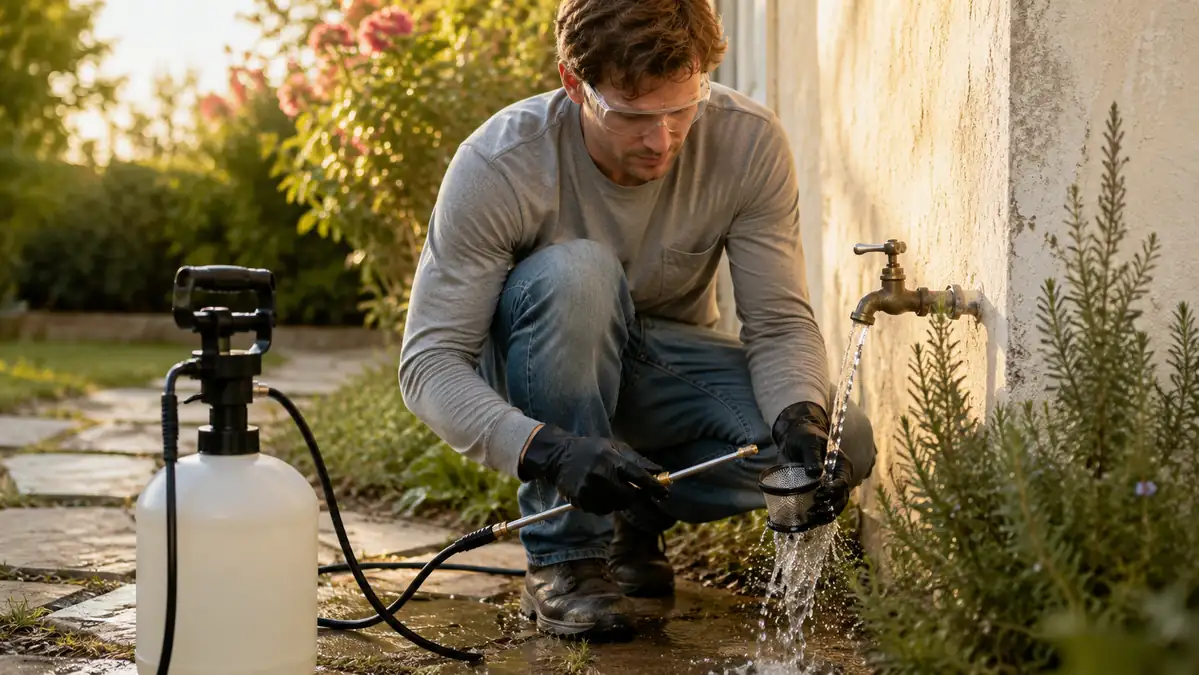
A fan-tip nozzle throws a flat, wide pattern rather than a single stream, and the trick to even coverage is overlapping each pass by about 10 to 15 percent instead of walking clean, side-by-side lanes. Picture painting a fence: nobody butts each roller stroke perfectly against the last one, they overlap slightly so there's no thin strip where the coat runs light.
I use the edge of the previous spray pattern, usually visible as a faint wet line on the grass, as my guide for where to start the next pass. If your yard doesn't give you an easy visual reference, a couple of cheap marking flags at the start and end of each row keeps you honest about where you've already covered, especially past the first twenty minutes when it all starts to blur together.
Resist the urge to go back over a stubborn patch of crabgrass a second time in the same session just because it still looks green. Doubling up on herbicide in one spot doesn't kill weeds any faster, it just risks browning out the surrounding turf and wasting concentrate you'll want for the rest of the yard. Give the label's recommended wait time before deciding a spot needs a repeat application.
Step 5: Rinse and Maintain the Backpack Sprayer After Every Use
Whatever herbicide is left in the lines and nozzle after you're done will sit there corroding seals and clogging the tip before your next use, so rinse the tank with clean water and run it through the wand for a minute before you put the sprayer away. I do this every single time, even when I'm planning to spray again the following weekend, because dried concentrate in a nozzle is one of the most common reasons a backpack sprayer starts spraying unevenly halfway through a season.
Pull the in-line filter and the nozzle screen and rinse both under the tap, then check the gasket on the tank lid for cracking. Chapin includes a couple of spare gaskets with the 61500 model, which has saved me a mid-season trip to the hardware store more than once. A sprayer leaking pressure at the lid can't hold consistent output no matter how carefully you calibrated it.
At the end of the season, don't just rinse and set the backpack sprayer on a shelf. Pump out any remaining water, leave the tank lid off so it can air dry completely, and store it somewhere it won't freeze if you're in a colder climate. A little water trapped in the pump housing over winter can crack a seal, and that's a repair that's entirely avoidable with five extra minutes in the fall.
What Else Helps
Wind and temperature matter as much as your technique. Spraying in anything over about 10 mph of wind pushes fine droplets off target and wastes herbicide on soil or plants you never meant to treat, and spraying in full afternoon heat can cause some products to evaporate before they're absorbed. Early morning, calm air, and temperatures under 85 degrees give you the most predictable results with any backpack sprayer, Chapin or otherwise. A cheap spray-pattern indicator dye, sold in small bottles at most hardware stores, is also worth the few dollars if you want to actually see your coverage pattern on the lawn before it fades, rather than just hoping you didn't miss a stripe.
Check the weather forecast before you start, not just for wind but for rain. Most post-emergent herbicides need somewhere between two and six hours of dry time to absorb into the leaf before rain can wash them off and undo the whole job. I've lost an entire afternoon of spraying to an unexpected afternoon shower more than once, and now I don't fill the backpack sprayer's tank until I've checked that the next several hours are actually clear.
Nozzle choice matters more than most people think too. A fan tip is built for broadcast coverage across open lawn, while a cone tip concentrates the stream for spot-treating cracks, fence lines, and individual weeds without drifting onto nearby plants you want to keep. Most backpack sprayers, including the Chapin I use, ship with both, and swapping between them takes about ten seconds.
Finally, keep a simple log of when and where you sprayed. A page in a notebook works fine, or a note on your phone with the date, the product, and the area covered. Most broadleaf herbicides need a couple of weeks to show full results, and without a record it's easy to lose track of which patches you've already treated and end up spraying the same stretch of lawn twice in a month out of pure forgetfulness.
The sprayer isn't what makes coverage even. Calibration, pace, and overlap are what make coverage even. The sprayer just has to be reliable enough not to get in the way.
A Sprayer That Holds Pressure Makes Every Other Step Easier
Consistent pump pressure and a tank you can actually see the fill line on take half the guesswork out of even coverage. See today's price on Amazon.
Amazon Check Today's Price on Amazon →