
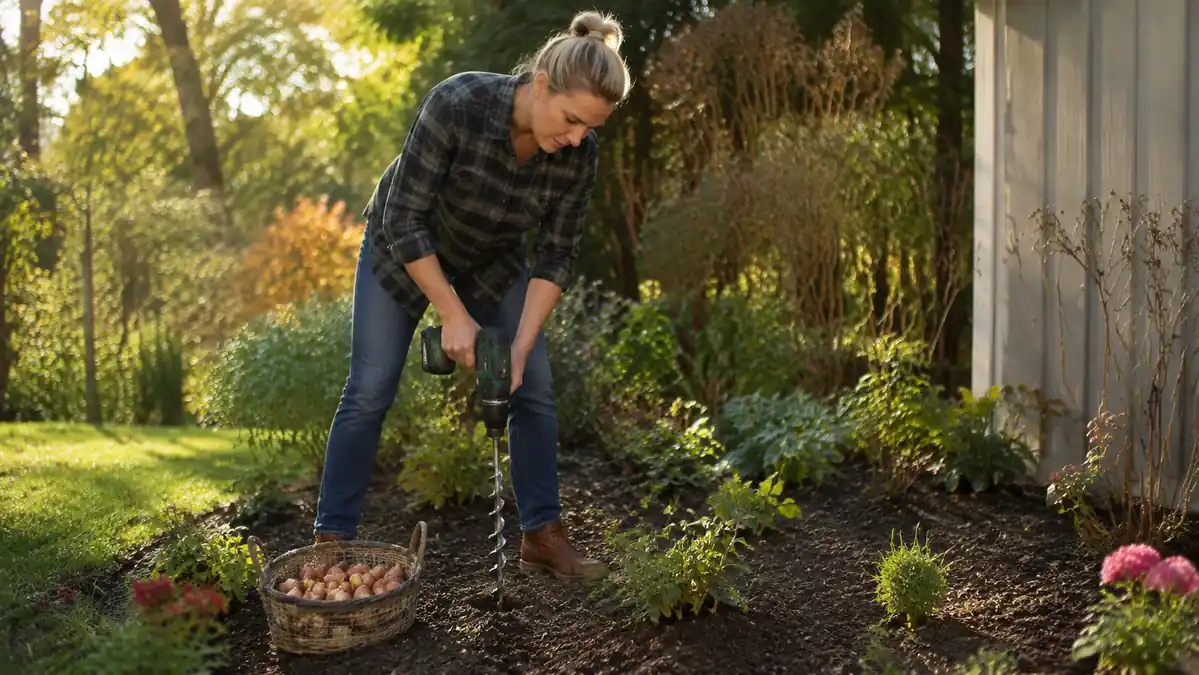
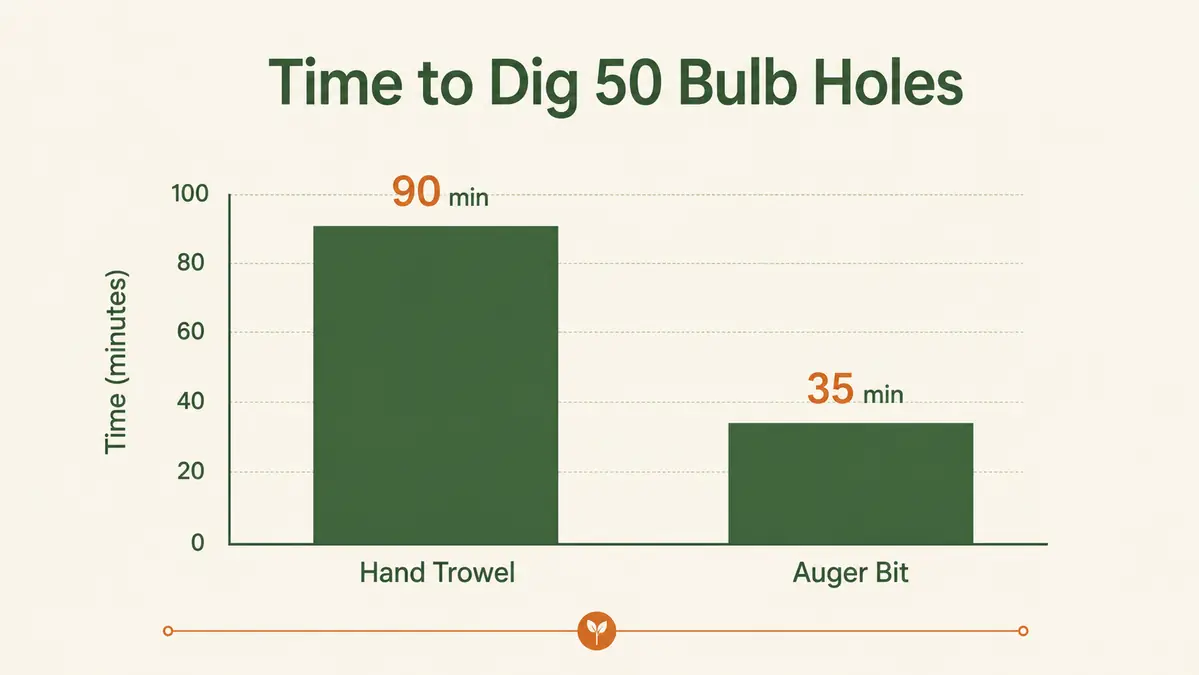
Every fall I used to spend an entire Saturday afternoon on my knees with a hand trowel, digging fifty tulip and daffodil holes one at a time in the flower bed along my driveway. My wrists ached, my back ached, and by hole thirty I was rushing the work just to get it done, which meant shallow, sloppy holes that never delivered the neat cottage look I wanted come spring. Then a neighbor showed me what a garden auger bit chucked into a cordless drill could do, and I haven't touched a trowel for bulk planting since. I picked up the TCBWFY 4 inch by 32 inch auger bit, the one with the dual sharp spiral blades, and what used to eat a whole afternoon now takes about forty minutes. If you plant more than a handful of bulbs, seedlings, or shrubs a year, here are ten reasons an auger bit belongs in your garden kit.
An auger bit isn't magic, it's just leverage. The spiral flutes pull soil up and out of the hole the same way a drill bit pulls wood shavings, so the drill does the digging instead of your shoulder. Chuck it into any cordless drill with enough torque, and you're boring a clean six to eight inch hole in about ten seconds. Here's what changed in my planting routine once I made the switch, one reason at a time.
Fifty Bulb Holes Shouldn't Take an Afternoon
The TCBWFY auger bit chucks into your cordless drill and bores a clean planting hole in seconds instead of minutes. See today's price and decide if it belongs in your kit.
Amazon See Today's Price on Amazon →An Auger Bit Turns Fifty Holes Into a Ten-Minute Job
My old routine for planting fifty tulip bulbs along the driveway was tortuous: kneel, stab the trowel, twist, pull, scoop, repeat, fifty times over. With the TCBWFY auger bit chucked into my 18 volt drill, I walk down the row, pull the trigger for about three seconds per hole, and move to the next spot. What used to take most of a Saturday afternoon now takes under an hour, holes and all. I walk through the exact time breakdown, start to finish, in my full review of this auger bit.
The Dual Blades Cut Through Roots and Clay Without Stalling
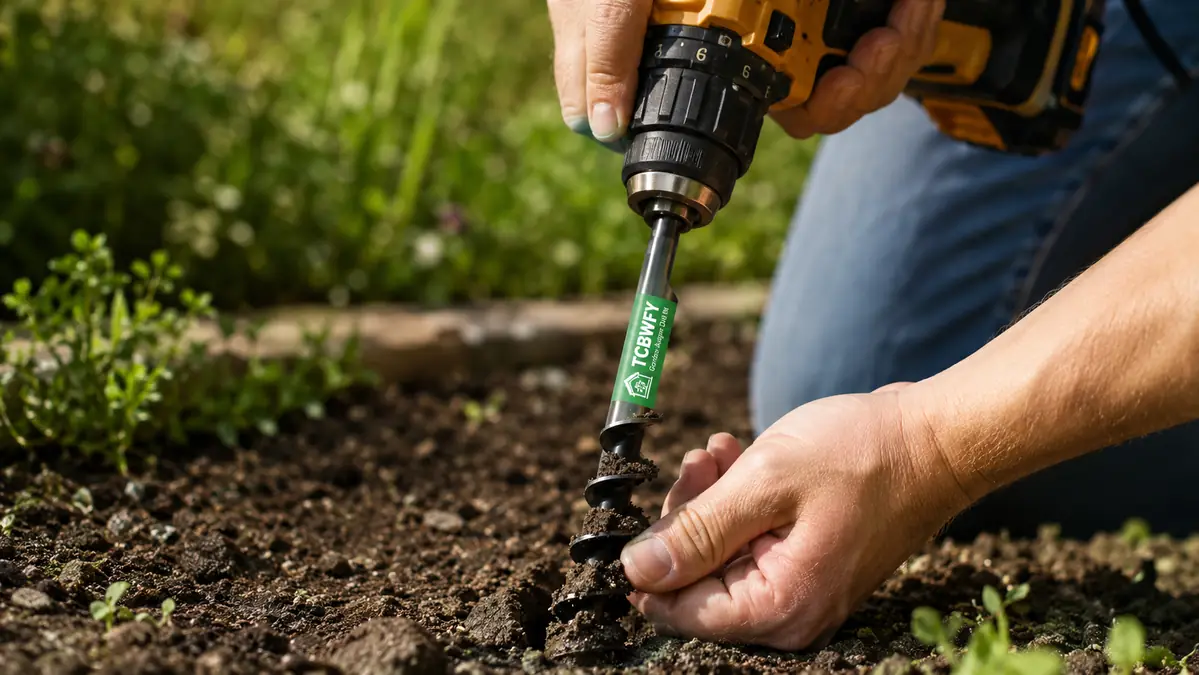
Bulb beds and shrub borders are full of old roots, rocks, and compacted clay that a hand trowel just bounces off of. The dual sharp blades on this auger bit chew through fibrous roots and packed clay without binding up or stalling the drill. I've bored through root mats from an old hedge that would have taken me twenty minutes of sawing with a hand tool, and the auger cleared it in maybe fifteen seconds. That cutting power is the real difference between a bulb planter gimmick and a tool that actually earns a spot in the shed.
One Auger Bit Handles Bulbs, Seedlings, and Small Shrubs
I use the same auger bit for spring tulip bulbs, fall garlic cloves, tomato and pepper seedlings, and even small potted shrubs up to about a gallon size. Swap the hole depth mentally, not the tool: a shallow pass for bulbs, a deeper pass for a seedling's root ball. One bit covers jobs that used to need a trowel, a bulb planter, and a post hole digger scattered across three different drawers in my garage.
Consistent Depth Every Single Time
A trowel hole is only as deep as your arm and patience allow, which means depth varies from hole to hole, and inconsistent depth means uneven bulb emergence in spring. The TCBWFY auger bit's flutes bore to a repeatable depth every time I hold the drill at the same angle and count the same few seconds of drive time. My tulip bed came up in one even wave last April instead of the scattered, staggered bloom I used to get with hand-dug holes.
It Saves Your Knees, Back, and Wrists
I'm fifty-two, and my knees do not love an afternoon of kneeling in the dirt anymore. An auger bit lets me stand upright, brace the drill, and drive the hole without ever getting down on the ground. My back thanked me the next morning too. If you've ever finished a planting day and needed to sit down with an ice pack, this is the single biggest quality-of-life upgrade on this whole list.
The 32-Inch Shaft Reaches Standing Height
At 32 inches long, this auger bit reaches from a standing position down into the bed without me hunching over. That length also means I can drive it deep enough for larger bulbs and small shrub root balls without the drill chuck ever getting close to the dirt. Shorter augers force you to crouch partway through the hole, which brings back the same knee strain you were trying to avoid in the first place.
Faster Holes Mean You Actually Finish the Bed in One Day
Because each hole takes seconds instead of minutes, I can finish planting an entire bed in one sitting instead of spreading it across two or three weekends. That matters more than it sounds. Bulbs and bare-root plants do best going into the ground close together in the same planting window, and dragging the job out over weeks means later holes go in under worse soil and weather conditions than the first ones did.
It Works With the Cordless Drill You Already Own
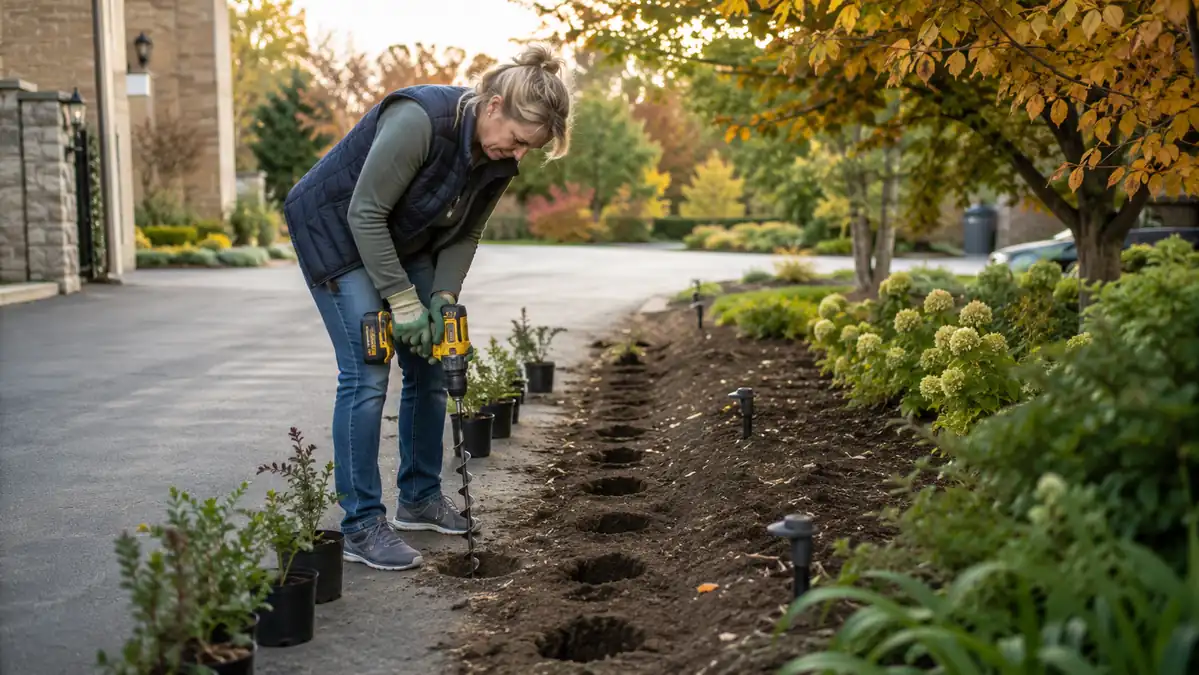
This auger bit chucks into any standard cordless drill with a 3/8 inch or larger keyless chuck, so there's no separate power tool to buy or charge. I run mine off the same drill I use for deck repairs and shelf hanging. If you're deciding between an auger bit and sticking with hand tools, I laid out the full side by side in my auger bit versus hand trowel comparison, including where a trowel still wins.
Loosens Compacted Soil Better Than a Trowel Ever Could
My side yard has heavy clay that turns to brick by midsummer. A trowel barely dents it. The spiral action of an auger bit doesn't just cut a hole, it works the soil loose on the way down and pulls the loosened dirt up and out, leaving the hole walls broken up instead of glazed smooth the way a trowel can leave them. Loosened hole walls make it easier for new roots to spread instead of circling a hard-packed edge.
The Time Saved With an Auger Bit Adds Up Over a Season
Add it up across a full planting season, spring bulbs, summer seedlings, fall garlic, and the odd shrub here and there, and I'm saving somewhere around fifteen to twenty hours a year that used to go to kneeling and digging by hand. That's real time back for the parts of gardening I actually enjoy, like watching what comes up in April instead of dreading the labor of getting it in the ground.
What I'd Skip
An auger bit isn't the right tool for every job. If you're planting a single tomato seedling or dropping in a few bulbs along a border, a hand trowel is faster to grab and put away than digging out a drill and bit. I'd also skip it in a bed packed with buried irrigation lines or shallow tree roots you can't see, since the auger doesn't know the difference between soil and a drip line until it's too late. And in very sandy or loose soil, the auger can spin faster than it bites, leaving a slightly wider hole than you'd get with a hand tool. For anything beyond a dozen holes in average garden soil, though, the time and effort saved make the auger bit the clear choice.
The trowel didn't disappear from my shed, it just stopped being the tool I reach for first.
Ready to Stop Kneeling for Every Hole You Dig?
Check today's price on the TCBWFY 4 inch by 32 inch auger bit and see if it fits your next planting day.
Amazon Check Today's Price on Amazon →