
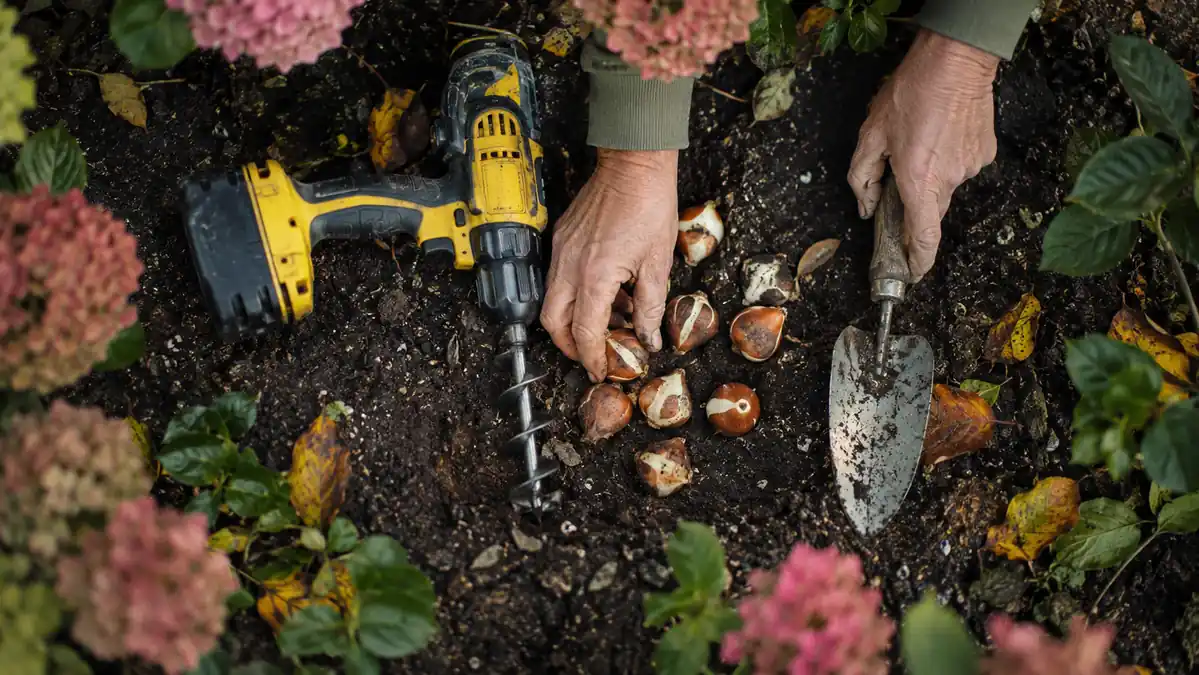
If you've ever knelt in a flower bed with a hand trowel, cranking out hole after hole for fifty tulip bulbs, you already know the short answer: a drill-powered garden auger bit digs planting holes faster and with a lot less strain on your wrist and lower back. I planted two hundred daffodil bulbs by hand the first year I gardened seriously, and by hole thirty my right wrist was aching enough that I taped a heating pad to it that night. The next fall I ran a TCBWFY auger bit through my cordless drill for the same job, and I was done in under twenty five minutes with my knees still clean.
That doesn't mean the trowel goes in the trash. A hand trowel still earns its spot in my garden tote for small jobs, tight corners, and anywhere I need to feel the soil with my hands instead of drilling blind. Below is exactly where each tool pulls ahead, spec by spec, so you can decide which one deserves the job this planting season.
| Spec | Garden Auger Bit | Hand Trowel |
|---|---|---|
| Price | Affordable one-time cost | Budget-friendly, one-time cost |
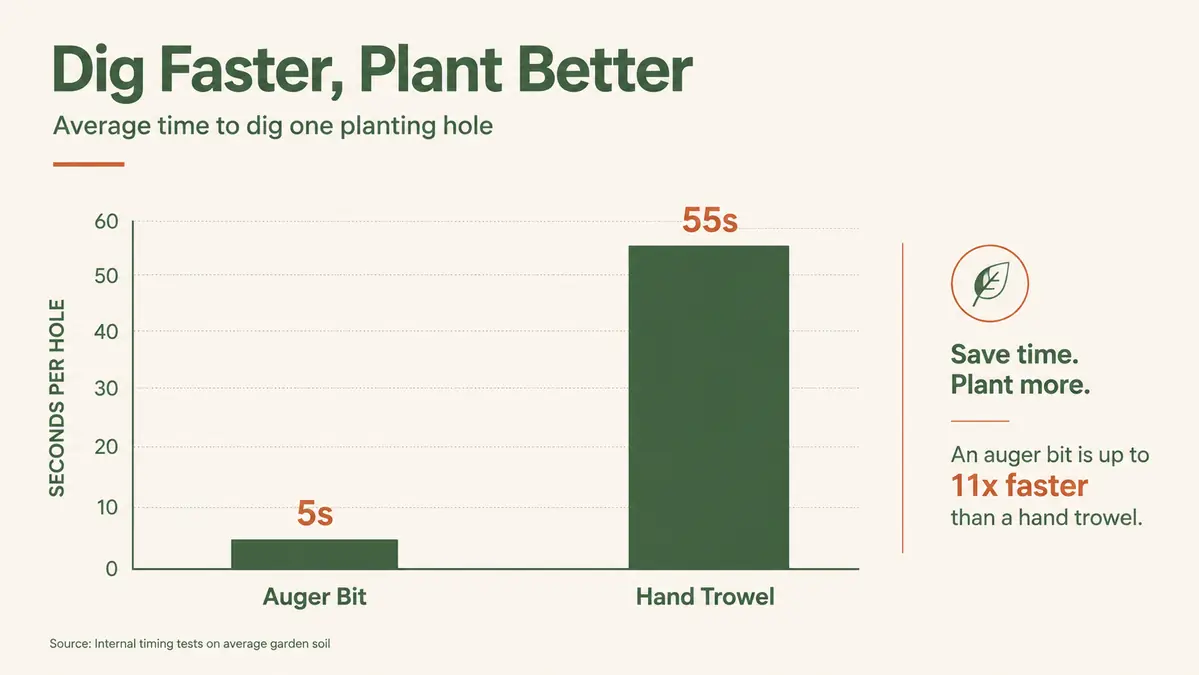
| Planting Speed | 5 to 8 seconds per 4-inch hole once the drill is running | 45 to 90 seconds per hole, more in compacted soil |
| Physical Effort | Minimal, the drill does the twisting, you guide it straight | High, your wrist and forearm cut and lift every scoop |
| Hole Consistency | Uniform width and depth, same 4-inch cylinder every time | Varies hole to hole depending on fatigue and soil |
| Depth Control | Repeatable, judged against the marked shaft or drill stop | Eyeballed against the blade length, less precise |
| Best For | Bulk bulb planting, bedding flats, 20 or more holes a session | Single plants, containers, tight spots near roots |
| Learning Curve | A few practice holes to get the feel of speed and pressure | None, pick it up and start digging |
| Power Source | Needs a cordless drill and a charged battery | None, fully manual, works anywhere |
Where the Auger Bit Wins
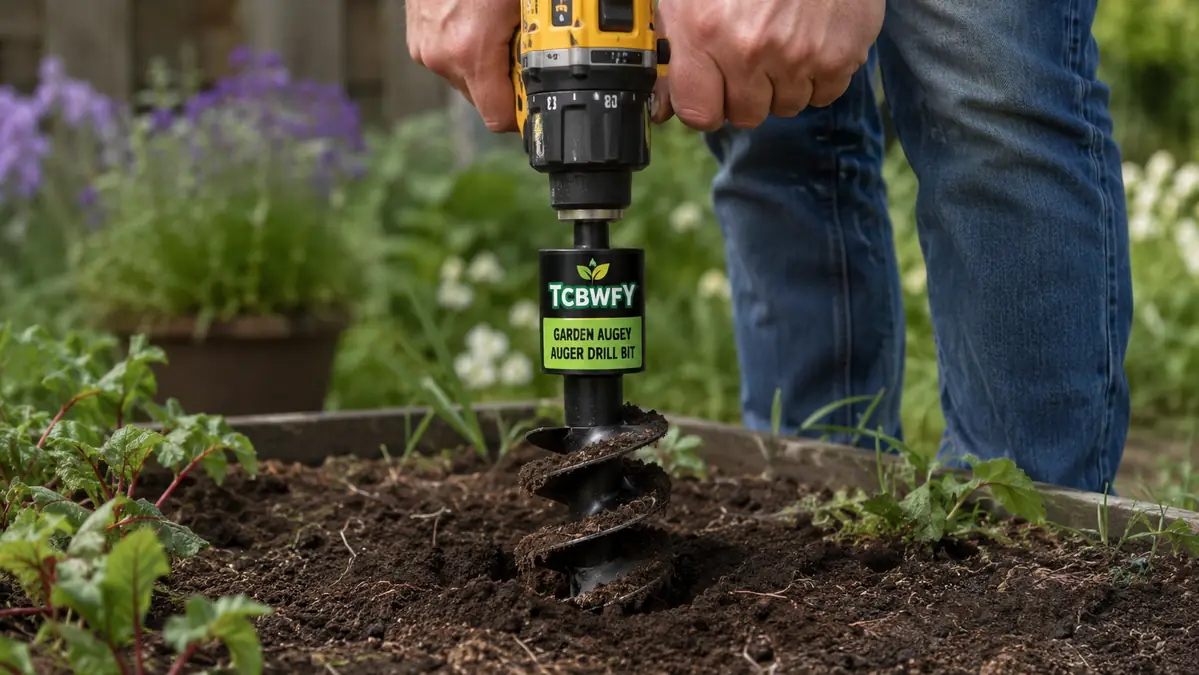
Once you've got a cordless drill and a charged battery, the auger bit turns planting from a chore into something closer to assembly line work. I run the TCBWFY bit at medium torque, let the twin blades bite into loosened soil, and pull straight up once the flutes fill with dirt. A four inch hole that would take me the better part of a minute of scraping and prying with a trowel takes five to eight seconds with the drill doing the twisting. On a Saturday morning I put in sixty tulip bulbs before the coffee in my mug went cold, and my hands never cramped once.
The bigger win is consistency. Every hole comes out the same width and roughly the same depth, because the bit's dual sharp blades cut a clean cylinder instead of the ragged, tapered scoop a trowel leaves behind. That matters more than people expect when you're planting bulbs in a row along a border. Uneven hole depth is a big part of why some tulips bloom two inches taller than their neighbors the following spring, and the auger bit mostly solves that problem for you before it starts.
The 4 by 32 inch shaft also means I'm standing while I plant instead of kneeling in wet mulch, which saved my knees during a rainy October when the beds never fully dried out. The steel construction has held up through two full planting seasons of bulbs, bedding annuals, and a handful of small shrub holes without the blades dulling enough that I've noticed a difference in cutting speed.
The bit earns extra points for versatility beyond bulbs. I've used the same TCBWFY auger to loosen holes for transplanting small shrubs, sink stakes for tomato cages, and even start pilot holes for a short run of fence pickets along one bed. It's not marketed as a multi-tool, but a 4-inch spiral bit chewing through a foot of soil in seconds is useful for more than just spring bulbs.
A four inch hole that used to cost me a minute of scraping now takes five seconds and zero cramping.
Where the Hand Trowel Wins
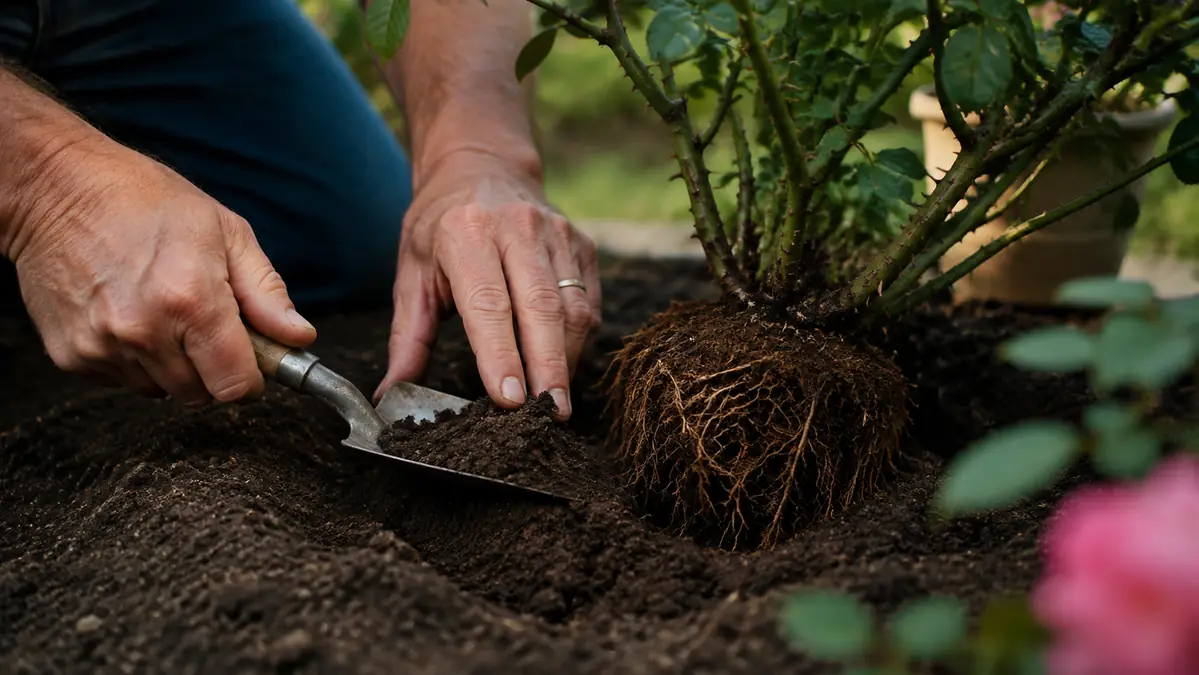
None of this makes the trowel obsolete. If you're planting a single hosta in a container, tucking a seedling between the roots of an established rose bush, or working somewhere a drill just can't reach, a trowel gives you a feel the auger bit can't match. You can sense a rock or a root before you hit it and adjust on the fly, something that's a lot harder to do once a spinning bit is already six inches into the ground.
It's also the tool that never lets you down. No battery to charge, no bit to hunt for in the garage, nothing to break except maybe the handle after a decade of leaning on it to pry up a stubborn root. At under fifteen dollars, it's the tool I hand a beginner or a kid who wants to help in the garden, because there's no learning curve and nothing spinning to be careful around.
A trowel is also the only sensible choice once you're planting close to something already established. Sliding a spinning auger bit near a peony's crown or a rose's root flare is asking for damage. The trowel lets you work in an inch at a time, feeling for roots as you go, which is exactly the kind of careful, slow work that has no business being done with a power tool.
Skip the Wrist Ache This Planting Season
If you've got more than a dozen holes to dig this weekend, the TCBWFY auger bit turns an afternoon of kneeling into twenty minutes of standing. Check today's price on Amazon before your next bulb order shows up.
Amazon Check Today's Price on Amazon →The Wrist and Back Math
Here's the math that finally convinced me to switch for anything over a dozen holes. A trowel asks your wrist to flex and twist under load with every single scoop, and that repetitive motion is exactly the kind of thing that leads to tendonitis if you do it for an hour straight. By hole twenty five or so, most gardeners I know start compensating with their shoulder or their lower back, which is usually when the real soreness shows up the next morning instead of the same afternoon.
The auger bit shifts almost all of that load onto the drill's motor. Your job becomes guiding the bit straight down and pulling it straight up, which is a fraction of the repetitive strain. I timed myself digging fifty holes each way one October afternoon: the trowel took just under forty minutes and left my forearm sore for two days, the auger bit took under nine minutes and I felt nothing the next morning.
Setting Up the Auger Bit the First Time
The first time you chuck the TCBWFY bit into a drill, start on the lowest torque setting and test it in a section of bed you don't mind messing up. The hex shank seats into any standard cordless drill chuck, and the dual blades are aggressive enough that going in at full speed on the first try can walk the bit sideways instead of straight down. A slow start, then a steady squeeze on the trigger once it's biting into loosened soil, gives you the straightest hole.
Wear eye protection and keep loose sleeves out of the way, since the flutes throw soil and small bits of debris as they spin. Once you've drilled ten or fifteen holes you'll have a feel for how much downward pressure the bit needs in your particular soil, sandy loam takes almost none, while compacted clay needs a firmer, steadier push to keep the bit cutting instead of stalling.
A drill with at least 20 volts and a low gear setting handles the torque best, since an underpowered drill can bog down in heavy clay and stall the bit mid-hole. I've run mine off an 18-volt drill with no issues, but anything weaker really does struggle once the ground gets dense.
What About a Bulb Planter or Post-Hole Digger
Before I landed on the auger bit, I tried a manual stab-style bulb planter, the kind you push into the ground and twist by hand. It was better than a trowel for depth consistency, but it still asked my shoulder to do the work, and it topped out at maybe fifteen holes before my arm wanted a break. A post-hole digger is overkill for anything smaller than a fence post, and it's too wide and too heavy to be practical for bulb spacing.
The auger bit splits the difference. It's narrower and faster than a post-hole digger, and unlike the stab-style bulb planter, the drill supplies the effort instead of your shoulder. For anyone who already owns a cordless drill, it's hard to justify buying a single-purpose bulb planter when the auger bit does the same job faster and doubles as a general digging tool the rest of the year.
What Two Planting Seasons Taught Me
After two full planting seasons running both tools side by side, I've settled into a routine that uses each one for what it's actually good at. Big bulb orders, bedding plant flats, and anything where I need twenty or more identical holes go straight to the drill. The trowel stays in my back pocket for the finishing work, tucking soil back around a bulb, digging out a stray weed root, or planting the handful of things that need a gentler touch than a spinning blade allows.
The TCBWFY bit's blades have stayed sharp enough that I haven't had to touch them up, even after going through rocky patches in my clay-heavy beds that I expected would chip the edge. The only real maintenance has been hosing off caked mud after wet-weather planting and making sure the hex shank stays seated properly in the drill chuck so it doesn't wobble under load.
Who Should Buy Which
If you're planting more than fifteen or twenty holes in a single session, whether that's a fall bulb order, a flat of bedding annuals, or a new row of perennials, the auger bit pays for itself in saved time and saved joints the very first weekend you use it. If your gardening is mostly a few container plants, tight spots around existing shrubs, or you simply don't own a cordless drill, a basic hand trowel still gets the job done and costs a fraction as much. A lot of gardeners, myself included, end up owning both and reaching for whichever one fits the job in front of them that day.
Soil type matters too. In sandy or well-worked garden loam, either tool gets the job done without much drama. In compacted clay or a yard full of roots and rock, the drill's torque does the heavy lifting that a trowel simply can't match without turning fifteen minutes into an hour of prying and swearing. If your beds fight you every spring, that's the clearest sign the auger bit is worth the money.
Fifty Bulbs, Twenty Minutes, No Sore Wrist
That's the trade I made when I picked up the TCBWFY garden auger bit. If your fall planting list is longer than a dozen holes, see today's price on Amazon and decide for yourself.
Amazon Check Today's Price on Amazon →