
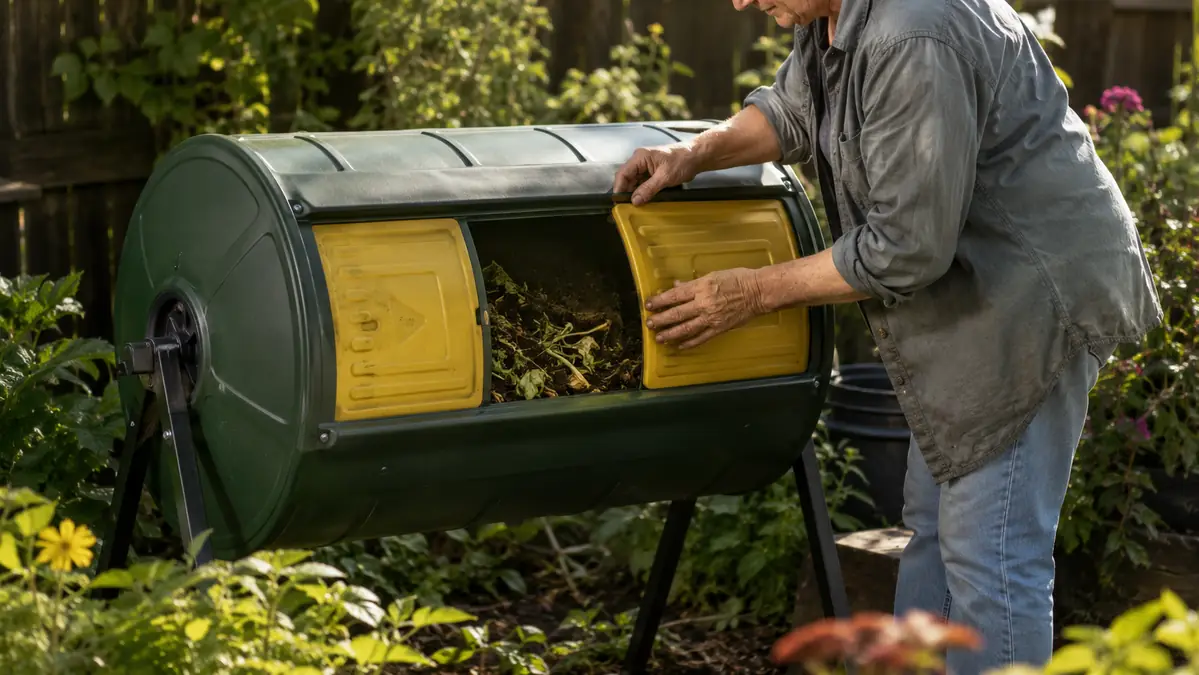
My neighbor kept an open compost pile against her back fence for six years, and every August it smelled like something had died in it. Raccoons tipped it over twice looking for food scraps, and turning it with a pitchfork left her wrists sore for two days each time. When she finally borrowed my F2C compost tumbler last spring, she called me before dinner to ask why she'd waited so long. That's the short version of why I stopped recommending open piles to anyone who isn't sitting on two acres with a fence line far from the house.
I've used a compost tumbler myself for four years now, and my current one is that same F2C dual chamber unit, the 43-gallon model with sliding doors on each side, sitting on a solid steel frame a few feet from my back door. That's something I never would have done with an open pile. Below are ten reasons a compost tumbler beats an open pile, based on what actually changed once I stopped forking a heap and started spinning a drum instead.
Tired of Forking a Smelly Pile Every Weekend?
The F2C dual-chamber tumbler seals kitchen scraps and yard waste away from pests, and a few spins replace an hour of forking. Check today's price on Amazon before your next yard cleanup.
Amazon Check Today's Price on Amazon →A Compost Tumbler Seals Out Rats and Raccoons
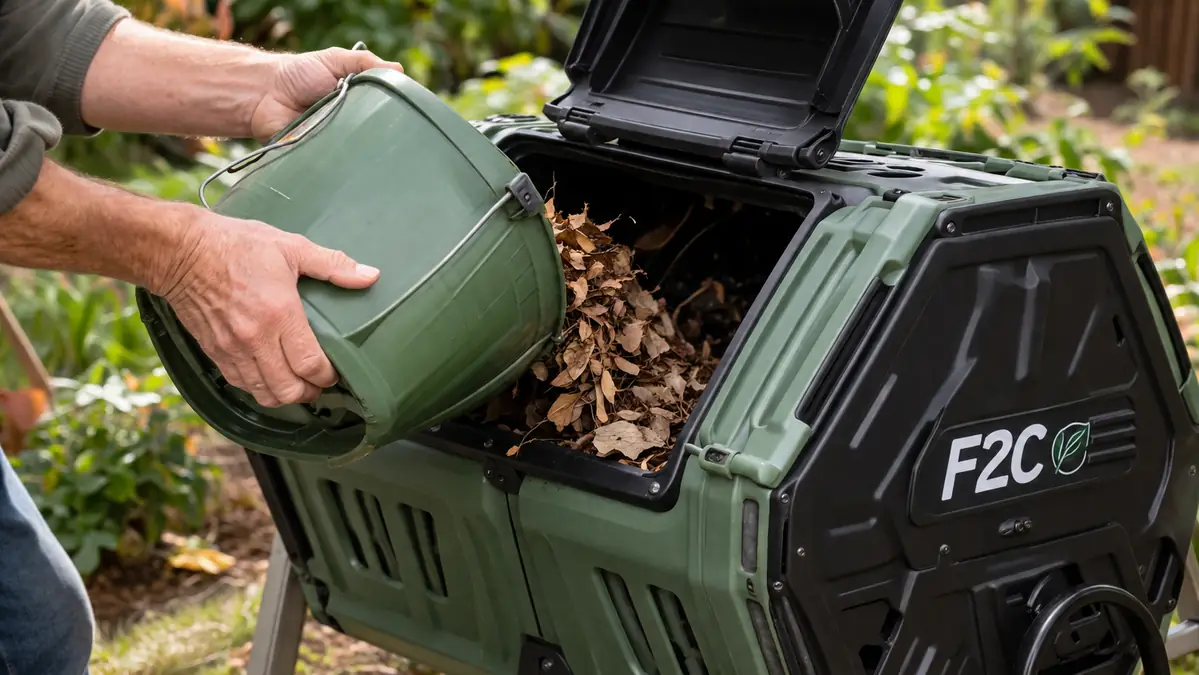
An open pile is an all-you-can-eat sign to anything with a nose. I lost more than one bucket of scraps to raccoons before I switched. A compost tumbler like the F2C closes with sliding doors on both chambers, so there's no gap for a raccoon paw or a rat to squeeze through. Mine sits four feet from my kitchen door now, something I'd never have risked with an open heap.
No Turning Fork, Just Spin the Tumbler
Turning an open pile with a fork is real labor, ask anyone who's done it after a big fall cleanup. A compost tumbler swaps that for a spin of the drum, thirty seconds instead of ten minutes of forking and lifting. My shoulders noticed the difference the first week. The F2C's handle turns easily even with both chambers loaded, so mixing evenly just means a few rotations every couple of days.
A Compost Tumbler Finishes Faster Than a Pile
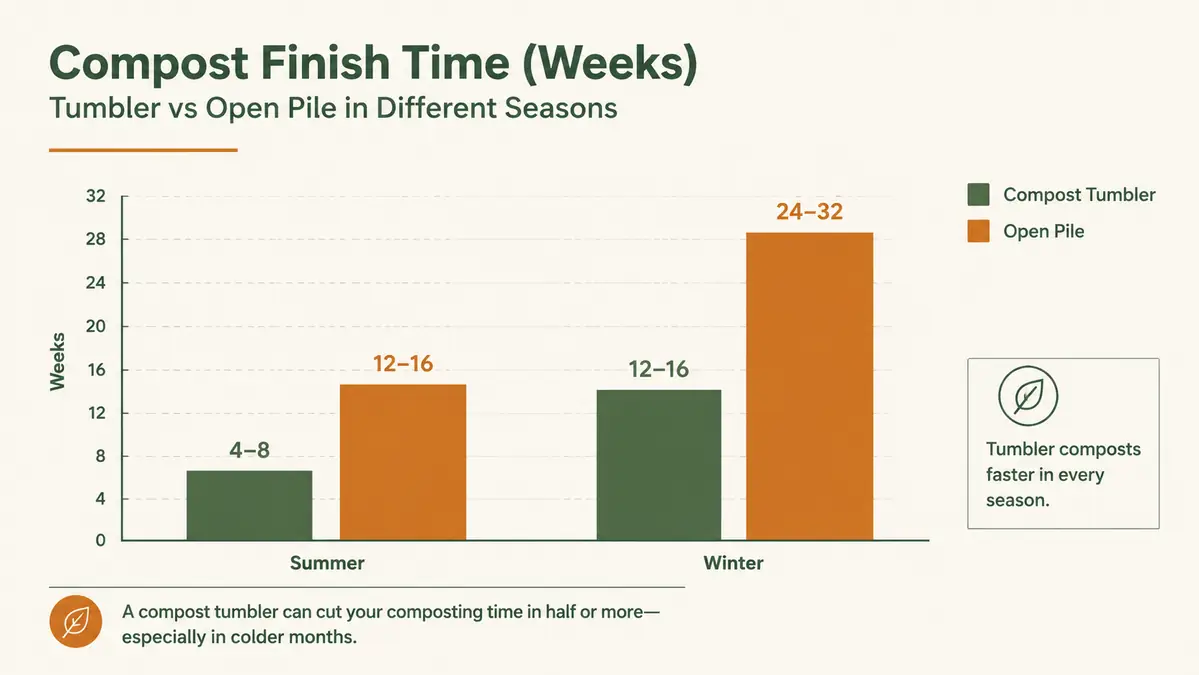
Open piles can take six months to a year to break down, longer in cooler climates. A compost tumbler traps heat inside the drum and mixes material evenly every time you turn it, so microbes get steady oxygen and warmth. My batches in the F2C finish in four to six weeks in summer, closer to eight in winter. For the full day-by-day breakdown, see my year-long compost tumbler review.
Two Chambers Mean You're Never Starting Over
A single pile forces an awkward choice: keep adding fresh scraps to material that's almost finished, or stop adding and wait. The F2C's dual chamber design solves that by letting one side cure while you keep feeding the other. I add kitchen scraps to chamber one all week, and chamber two just sits and finishes undisturbed. Once it's ready, I empty it and swap sides.
A Tumbling Compost Bin Keeps the Smell Contained
Smell was the actual reason my neighbor asked to borrow mine. An open pile breathes straight into the yard, and if the ratio of greens to browns gets off for even a few days, you'll know before you see it. A closed compost tumbler holds odor inside until you open the door to add material. Mine has sat within arm's reach of my patio table for two summers and I've never caught a whiff at dinner.
No Rain-Soaked, Sun-Baked Mess Like an Open Pile
Open piles are at the mercy of weather. Too much rain turns them into a soggy, anaerobic mess that smells worse and breaks down slower. Too much sun and the outer layer dries out and stalls. A tumbler's solid lid and enclosed drum keep moisture fairly steady no matter what the sky is doing. I check mine after a storm and it's damp, not drowned.
Easier on Your Back Than Forking a Pile
I'm not twenty-five anymore, and bending over a pile with a pitchfork for twenty minutes isn't something my lower back forgives the next morning. Spinning the F2C tumbler is upright work, a few rotations of the handle and you're done. My father-in-law, in his seventies and still growing most of his own vegetables, switched to a tumbler for exactly this reason and hasn't looked back.
A Compost Tumbler Keeps Weed Seeds From Spreading
Open piles rarely get hot enough at the edges to kill weed seeds and pathogens, so you can end up spreading weeds right back into your garden beds. A compost tumbler mixes material from edge to center every time you spin it, cycling the whole batch through the hottest part repeatedly. That's part of why compost out of my F2C looks and behaves cleaner in the beds than what I used to pull off the old pile.
A Neater Look for Small Yards and Close Neighbors
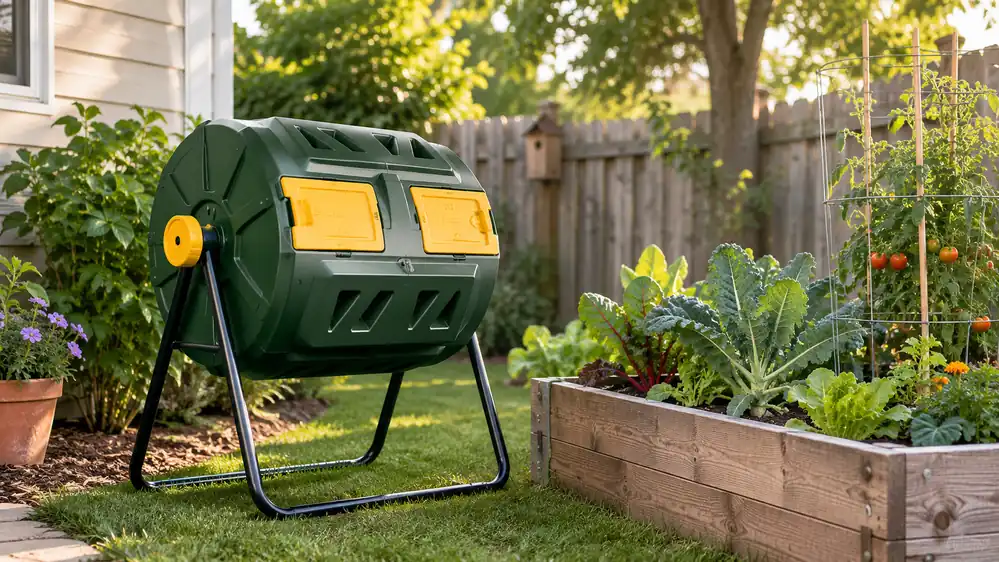
Not every yard has a back corner far from the house or the property line. A compost tumbler is a contained, boxy shape on legs, closer to a piece of yard equipment than a decomposing heap. I get more compliments than complaints on mine, and it's been visible from my patio for years. If you're in a subdivision or have an HOA with opinions about yard appearance, that matters more than it sounds like it should.
A Compost Tumbler Keeps Working Through Winter
Open piles slow to a near stop once the ground freezes, sometimes not restarting until well into spring. My F2C tumbler, sitting off the ground on its steel frame, holds heat a little longer into the cold months, and a spin on milder winter days keeps material from fully seizing up. It's not fast in January the way it is in July, but it never fully stops the way my old pile did.
What I'd Skip
I'll be honest about the tradeoffs too. A compost tumbler holds less material than a big open pile, so if you're managing a full acre of yard waste, you'll likely need more than one bin or a supplemental pile for bulk material like fall leaves. The F2C is a straightforward, no-frills tumbler, not a premium name-brand unit, and the steel frame is worth keeping an eye on for rust if you live somewhere wet. It also won't handle as much woody branch material as a slow open pile eventually can. For a typical kitchen-scraps-plus-yard-waste household, though, none of that outweighs the pest control, speed, and smell control you get in return. For the full side-by-side, see the compost tumbler vs. compost pile comparison.
I didn't downsize my composting because I got lazy. I downsized because a compost tumbler does more work in six weeks than my open pile did in six months.
Ready to Retire the Pitchfork?
See current pricing and availability for the F2C dual-chamber compost tumbler before your next big yard cleanup.
Amazon Check Today's Price on Amazon →