
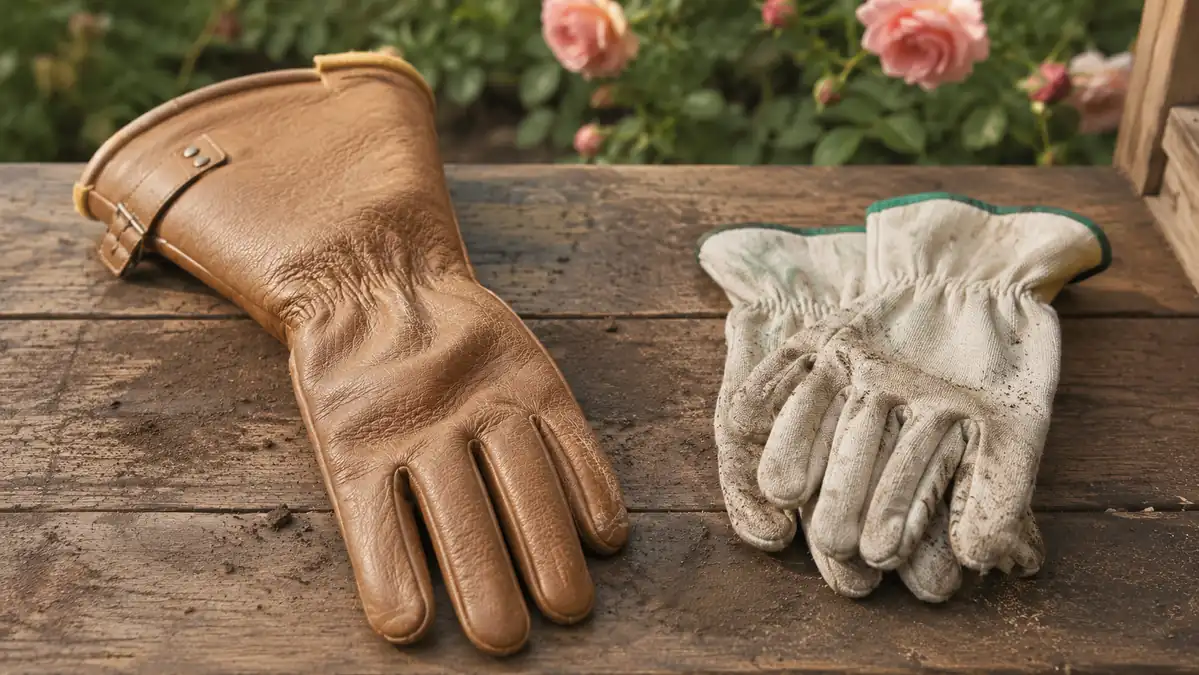
Every rose season for the last six years, I've ended up with the same striped forearms, thin red scratches running from wrist to elbow, sometimes deep enough to bleed through my sleeve by the time I finished pruning. I always wore garden gloves. The kind sold three-to-a-bag at the hardware store, cotton palms with a bit of rubberized grip. They did their job on my palms and fingers just fine. My forearms were a different story, because thorns don't care where your glove ends. They just keep going, and my old gloves stopped at the wrist.
So this past spring I picked up a pair of HANDLANDY gauntlet gloves before pruning day and wore them through the whole season, alongside my old standard garden gloves for the easy stuff like weeding and potting up seedlings. Here's the honest comparison, not just a spec sheet, but what actually happened to my arms after a season of roses, blackberry canes, and one memorable afternoon clearing a patch of volunteer thistle.
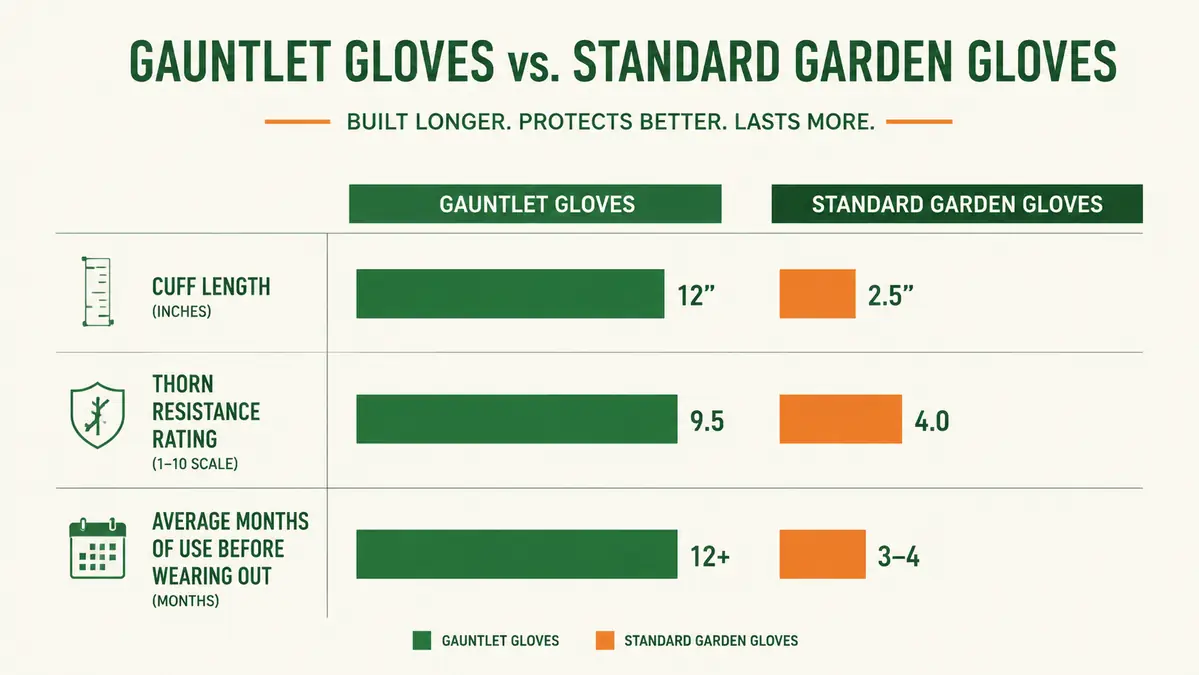
The short version: if you're pruning roses, hauling brush, clearing blackberry canes, or handling anything with thorns, barbs, or sharp edges, the gauntlet gloves win, hands down, forearms included. If you're weeding a raised bed, potting seedlings, or doing light work in soft soil, a standard pair of garden gloves is lighter, cooler, and cheaper, and you won't miss the long cuff at all. The real difference comes down to how far up your arm the glove actually protects, what the leather can stop that fabric can't, and how much dexterity you're willing to trade for that protection.
| Feature | HANDLANDY Gauntlet Gloves | Standard Garden Gloves |
|---|---|---|
| Forearm Protection | Gauntlet cuff extends roughly 14 inches past the wrist, covering most of the forearm | Stops at the wrist, forearm fully exposed |
| Thorn & Puncture Resistance | Breathable pigskin leather blocks rose thorns, blackberry canes, and cactus spines | Thin cotton or nylon, thorns and barbs poke through easily |
| Cuff Length | About 14 inches, long enough to tuck under a sleeve | 2 to 3 inches, a standard elastic or knit cuff |
| Dexterity | Slightly reduced at first, the pigskin leather softens and shapes to your hand after a few uses | High, thin fabric flexes easily for fine work like seed spacing |
| Material | Breathable pigskin leather palm, fingers, and gauntlet cuff | Cotton, polyester, or thin synthetic blend, sometimes with a rubber-dot grip palm |
| Durability | Held up through a full rose season plus brush clearing without a tear or blown seam | Wore thin at the fingertips and developed a small tear within a few months of regular use |
| Best For | Roses, blackberries, cactus, brush and bramble clearing, handling wire or rough lumber | Light weeding, potting, watering, seed starting, digging in loose soil |
| Current Price | Budget-friendly, sold as a pair | Very cheap per pair |
Where the Gauntlet Gloves Win
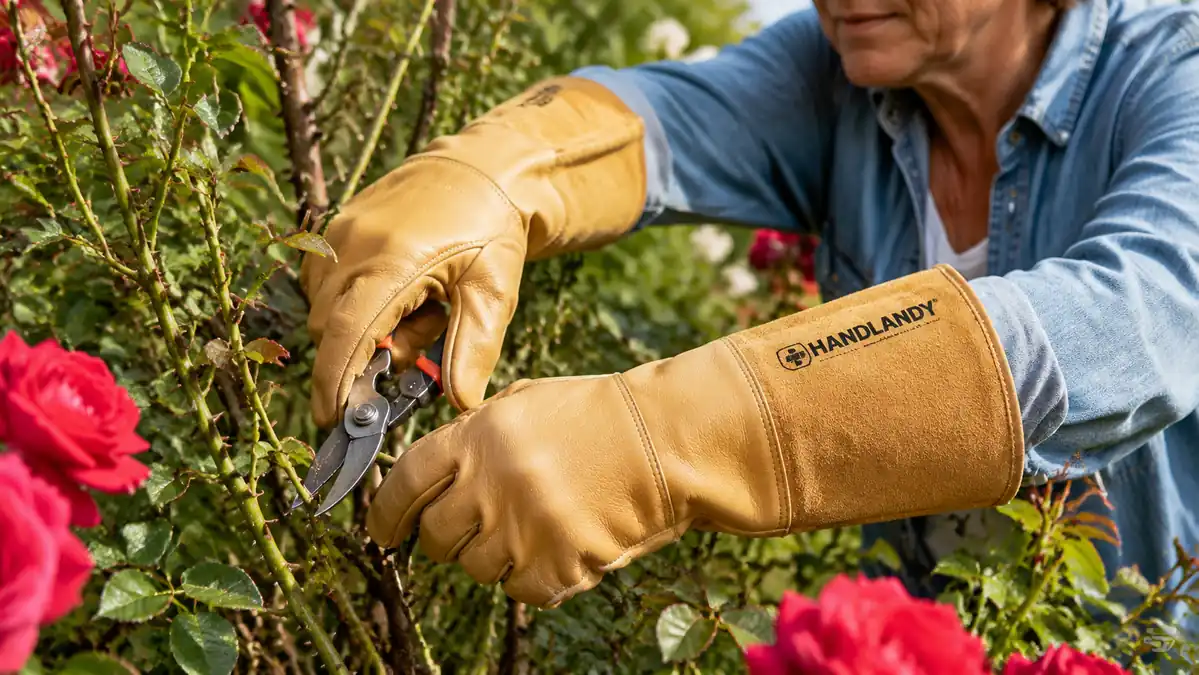
The gauntlet is the whole point of this glove, and it's the reason I bought them in the first place. HANDLANDY's cuff runs about 14 inches past the wrist, which is exactly where my old scratches used to start. The first time I reached deep into an overgrown climbing rose to cut a dead cane near the base, I braced for the usual sting along my forearm. It didn't come. The leather cuff caught every thorn that would have normally raked across bare skin, and I finished the whole bush without a single new scratch, something that hadn't happened in six seasons of pruning that same plant.
The pigskin leather itself is the other half of the story. It's naturally breathable, which matters because leather gloves have a reputation for turning your hands into a sweaty mess by the second hour outside. That wasn't my experience with these. The leather is thin enough to stay comfortable in warm weather but dense enough to stop a rose thorn or a blackberry barb cold. I also ran them through a patch of prickly pear I'd been putting off dealing with for two years, and the leather stopped every spine I tested it against. A standard fabric glove wouldn't have made it through that job without a dozen spines working their way through to my palm.
Durability is where the gauntlet gloves separate themselves further. After a full season of rose pruning, hauling brush to the burn pile, and that prickly pear cleanup, mine show some scuffing on the palm but no tears, no blown seams, and no soft spots where the leather has worn thin. My old standard garden gloves, by comparison, had a thumb seam split open by midsummer just from normal weeding. Leather takes abuse that cotton and thin synthetics simply can't absorb, and the gauntlet cuff means that abuse-resistance extends up your arm instead of stopping at the wrist.
There's a break-in period worth mentioning honestly. Straight out of the package, the leather is a little stiff, and fine motor tasks like tying a twist tie or threading a small stake felt clumsier than with my old fabric gloves. That eased up within a week of regular wear as the pigskin softened and molded to my hand. If you need immediate, out-of-the-box dexterity for delicate work, that first week is a real tradeoff to know about going in.
One detail that made a bigger difference than I expected is the wrist and forearm coverage working together as a single piece rather than two separate ideas. Standard fabric gloves just have a knit cuff that stretches over your hand and stops there. The gauntlet gloves slide up your whole forearm, and the fit stays snug enough that dirt, sawdust, and the occasional wasp haven't gotten inside, even reaching overhead into a climbing rose trained against the fence. Grip held up well too. Holding a pair of loppers or a folding saw felt secure even when the leather had a little sap on it from cutting through a green cane.
Where Standard Garden Gloves Win
None of this means my old standard garden gloves are obsolete. If I'm potting up a tray of tomato seedlings or pulling chickweed out of a raised bed, reaching for a 14-inch leather gauntlet feels like using a sledgehammer to hang a picture frame. Standard gloves flex easily right out of the bag, so fine tasks like separating tangled roots, placing small seeds, or adjusting a drip line fitting are noticeably easier with thin fabric than with leather, even leather that's already broken in.
Heat and breathability matter too, especially on a July afternoon when the forecast says 95 degrees and you're only planning twenty minutes of light weeding. Standard gloves are lighter and cooler on my hands for that kind of short, low-risk task, and I don't have to peel off a long cuff every time I want to check my phone or wipe sweat off my forehead. Price is the other honest factor. A basic pair of garden gloves runs a third of what the gauntlet gloves cost, and if you go through a pair every season anyway from normal wear, that lower price point adds up in your favor if thorns simply aren't part of your gardening.
Cleanup and storage are simpler with standard gloves too. Mine go straight into the washing machine with a load of towels when they get muddy, something I wouldn't try with leather gauntlet gloves, which I just brush off and let air dry instead. If you're the type who keeps a pair stuffed in a garden tote or the glove compartment of the truck for whenever you stop at a community plot, a lightweight fabric glove folds flat and takes up almost no room. Gauntlet gloves, with their stiffer leather and long cuff, need a little more space and don't fold down nearly as small.
They're also the better starting point if you're new to gardening or buying a pair for a kid helping out in the yard. Nobody wants to spend real money finding out gardening isn't their thing, and a basic pair of garden gloves is cheap enough to hand to a ten-year-old without worrying about it. Once thorny plants actually show up in the yard, whether that's a first rose bush or a volunteer blackberry patch nobody planted on purpose, that's the point where I'd say it's worth stepping up to a gauntlet glove instead of pushing through with a pair that stops at the wrist.
Fit, Sizing, and Wrist Closure
Sizing is worth checking closely no matter which glove you land on. HANDLANDY's gauntlet gloves run true to a standard men's medium through XL range, and I'd size up slightly if you're between sizes, since the leather takes a week or so to loosen up and a snug fit stays snug through that break-in period. Standard garden gloves are more forgiving on sizing because the fabric stretches immediately, which is part of why they're an easy one-size-fits-most gift or a pair you can hand off to whoever's helping in the yard that weekend without measuring anyone's hand first.
The wrist closure is where the two styles diverge the most. Standard gloves rely on a knit or elastic cuff that grips your wrist and calls it done, quick to put on and take off but offering zero coverage past that point. The gauntlet's long cuff has to be pulled up your forearm each time, which takes a few extra seconds, and on a hot day you'll want to roll your sleeves up first so the leather doesn't trap fabric underneath. It's a small extra step, but it's the tradeoff for the coverage that actually kept my arms scratch-free through a full season of thorny work.
Tired of forearms that look like they lost a fight with a rose bush?
See today's price and current availability on the HANDLANDY long-cuff leather gauntlet gloves.
Amazon Check Today's Price on Amazon →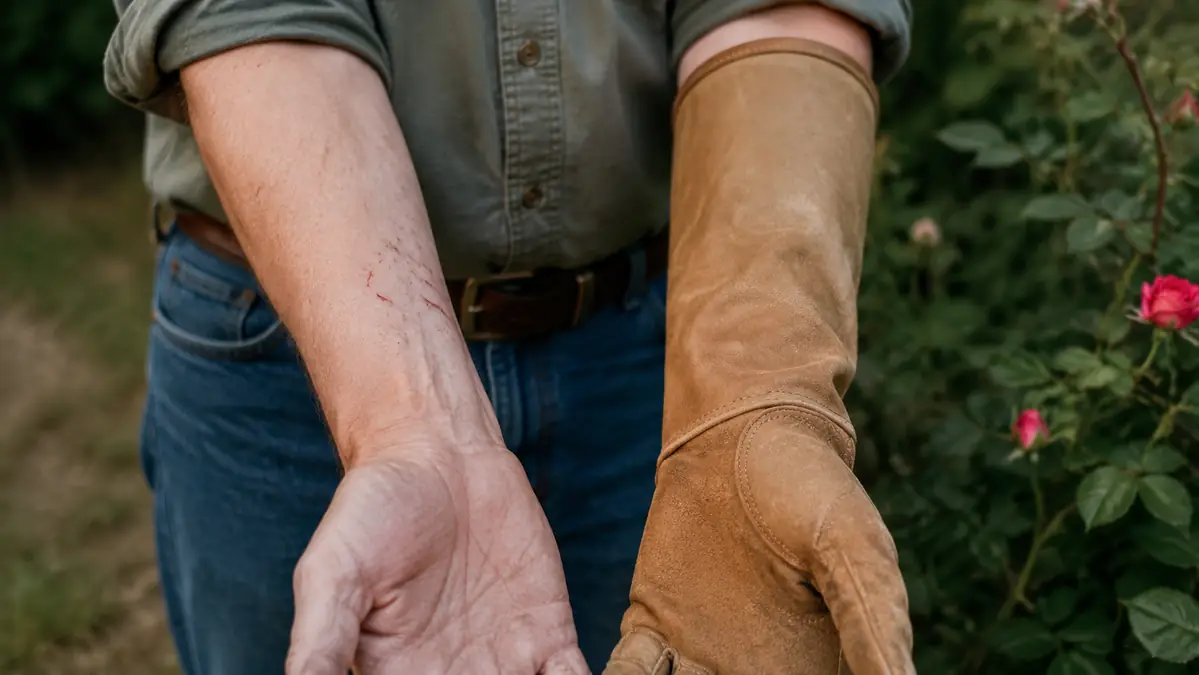
Who Should Buy Which
If your garden includes roses, blackberries, raspberries, cactus, or any kind of brush and bramble clearing, get the gauntlet gloves. The forearm coverage alone is worth the price difference, and after a season of not walking away scratched up every time I prune, I'm not going back to a standard pair for that kind of work. HANDLANDY's cuff length and pigskin leather held up to everything from thorny canes to rough-cut lumber without a tear, and that kind of durability means you're not replacing them every few months the way I was replacing my old fabric gloves.
If your gardening is mostly weeding, potting, watering, and working in loose soil with nothing sharp involved, a standard pair of garden gloves will serve you fine and save you money doing it. That's honestly how I use both now. The standard gloves live by the back door for quick jobs, deadheading, checking on seedlings, a few minutes of weeding before dinner. The gauntlet gloves come out whenever roses, brambles, or brush are on the agenda. If I had to pick just one pair for a garden that includes anything thorny, though, the gauntlet gloves are the ones I'd keep.
One more thing worth weighing before you decide: how often thorns actually show up in your yard versus how often you're doing quick, low-risk tasks. If roses, brambles, or brush clearing are only an occasional weekend job for you, it might make sense to own one pair of gauntlet gloves for those specific tasks and keep a cheap standard pair for everything else, the way I ended up doing without really planning it that way. Buying both isn't overkill. The gauntlet gloves are budget-friendly today, and having the right glove for the job in front of you beats reaching for whatever's closest and hoping for the best.
Ready to prune a full season without a single new scratch on your arms?
See current pricing and availability on the HANDLANDY thorn-proof leather gauntlet gloves.
Amazon Check Today's Price on Amazon →