
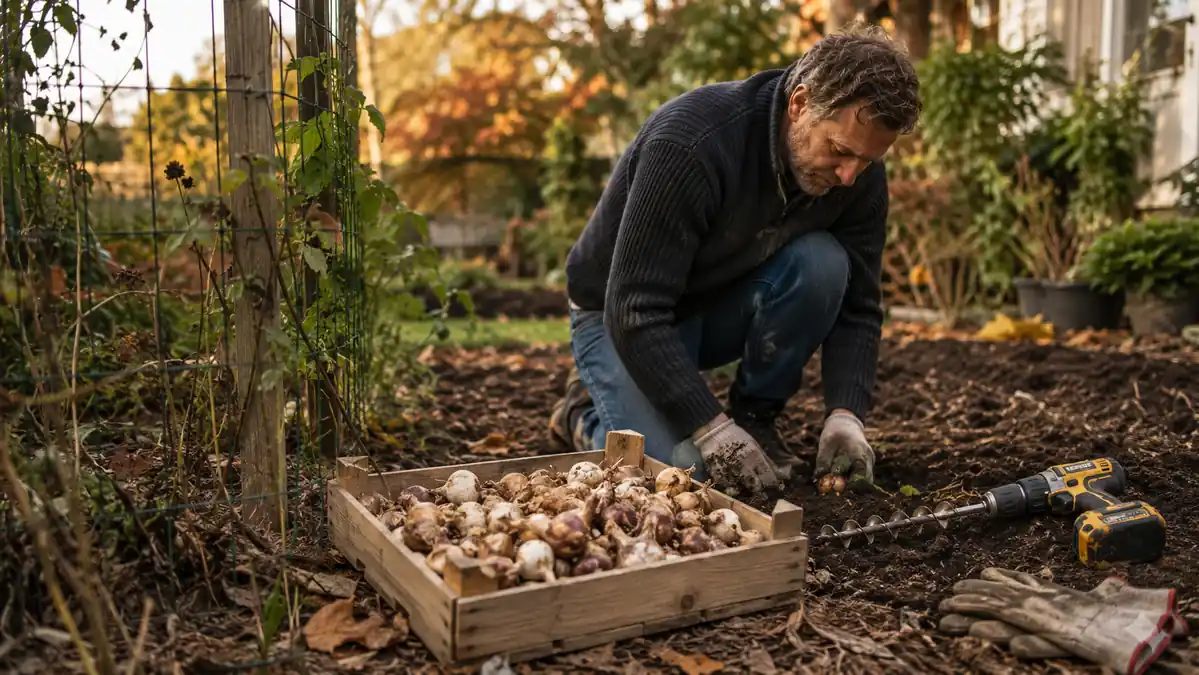
I bought this auger bit two falls ago expecting it to survive maybe one planting season before something snapped, stripped, or dulled past the point of being worth the drawer space. That's usually how cheap drill attachments go. Two seasons and, by my rough count, somewhere north of 400 holes later, it's still living in my garage, and I've got a much more honest read on it now than I did after that first spring when everything still felt shiny and new.
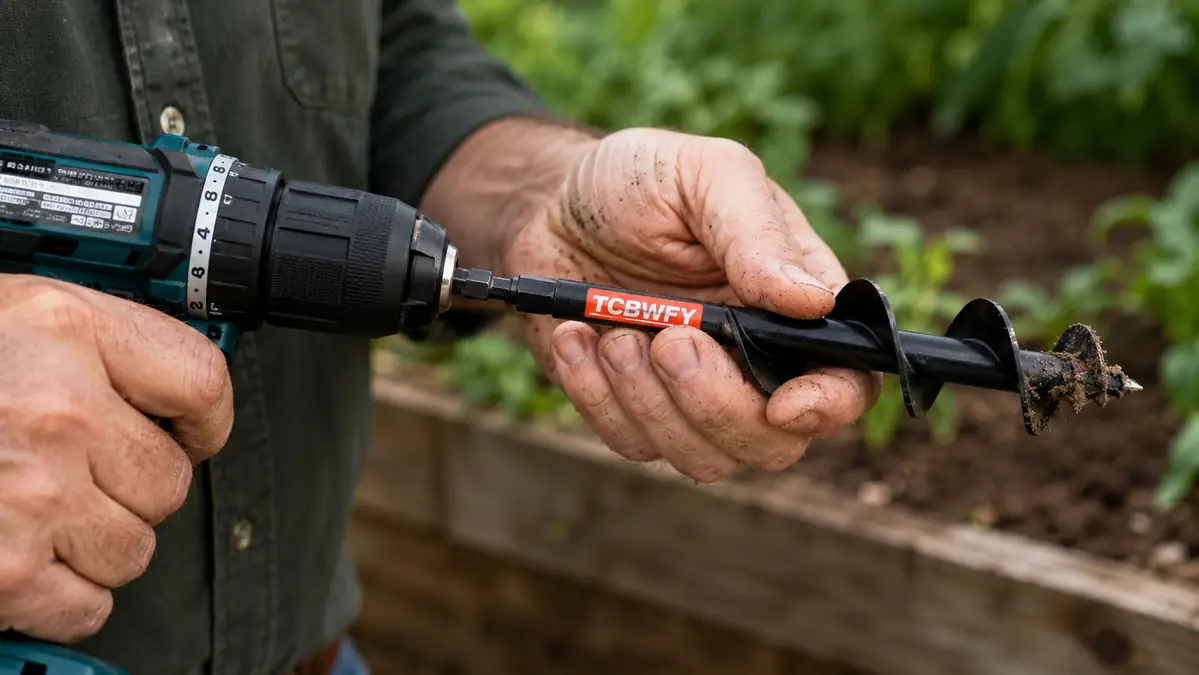
The first season was tulips and daffodils along the front border, about 340 bulbs in one long October weekend. The second season I added a row of allium and a bed of ranunculus corms out back, closer to 210 holes, plus a scattering of bedding plants each spring in between. That's enough repeated use that the shine wears off and you find out what the tool is actually like on hole number 380, not hole number 12. The bit I've been running through all of it is the TCBWFY spiral auger, a 4 inch by 32 inch bit with a hex shaft and dual blades near the tip, and this is the honest version of that story, not the five-star, everything-was-perfect version.
The Quick Verdict
A genuinely useful tool that saved my back over two full planting seasons, but it has small annoyances worth knowing before you buy, and it's not the flawless miracle some reviews make it sound like.
Amazon Check Today's Price →Still on your knees fighting a trowel through fall bulb season?
This spiral auger bit turns your cordless drill into a bulb-hole machine, no kneeling required. See today's price and current availability on Amazon before your next planting weekend.
Amazon Check Today's Price on Amazon →How I've Come to Rely on It, Season One and Season Two
My property has a curved front bed, a smaller bed by the mailbox, and six raised vegetable beds around back, and every fall for years I put in more bulbs than my knees ever really agreed to. Season one with the auger bit was almost all bulb work, tulips and daffodils in that front bed, and I remember being surprised at how little I second-guessed the purchase after the first hour. It wasn't a demo-video moment where everything looks perfect in loose potting soil. It was real yard clay with rock in it, and the bit kept working.
Season two is where things get more interesting, because that's when a tool either proves itself or starts showing its cracks. I added allium bulbs and ranunculus corms to the mix, plus a spring round of bedding plants, and I also started using the bit for something the listing never mentions: loosening compacted soil pockets in my raised beds before direct-sowing bean and squash seeds. It's not what it's built for, but it worked well enough that I kept doing it, running the bit in a few inches, backing it out, and repeating along a row to break up a crust of dried-out soil.
What I didn't expect going into season two was how much muscle memory changes how you use a tool like this. Season one, I was stopping and second-guessing every hole, checking depth constantly, worried I'd overshoot and disturb a bulb I'd already planted three inches over. By season two I could feel through the drill when the bit hit the right depth in my particular soil, and the whole process got noticeably faster, not because the tool changed but because I finally knew how to use it.
Before I settled on this one, I priced out augers from a couple of well known drill bit brands that ran two to three times the cost for what looked like the same spiral design. TCBWFY isn't a name you'd recognize from a hardware store aisle, it's one of the many generic import brands you find scrolling through Amazon, and I want to be upfront about that instead of pretending otherwise. What sold me wasn't the name on the packaging, it was the review count and the return rate, and after two seasons of actual use I think that gamble paid off. I'm not going to tell you it's built like a name-brand tool, because I don't think it needs to be to do this specific job well.
The Hex Shaft and Chuck Connection: What Nobody Tells You
Here's the part most reviews skip past entirely. The hex shaft on this bit fits a standard drill chuck fine, no adapter needed, but the connection isn't foolproof, and I learned that the hard way in the second week of season one when the bit slipped loose mid-hole and spun freely in the chuck without actually turning the auger. It's an easy fix, you just reseat it and crank the chuck down harder than feels necessary, but it caught me off guard because nothing in the box or the listing warns you that a loosely tightened chuck will let the bit slip under load.
By season two I'd developed a habit of giving the chuck an extra quarter turn by hand after tightening with the drill itself, and I never had a single slip after adopting that habit. It sounds like a small thing, but if you skip it, especially in denser soil where the bit meets more resistance, you'll find yourself stopping every ten or fifteen holes to re-tighten instead of working a steady rhythm. Nobody tells you that in the marketing photos of someone smoothly drilling one perfect hole in soft mulch.
The other thing nobody mentions is that the bit can walk a little when you first touch it to loose or mulched soil, skating sideways an inch or two before it catches and starts digging straight down. On bare, slightly damp soil it's a non-issue, the tip bites almost instantly. But if you're working a bed that's freshly mulched or has a layer of loose compost on top, I'd recommend either brushing the mulch aside first or starting the bit at a slight angle and straightening it out once it catches, rather than expecting it to drill a perfectly vertical hole from a dead stop on loose material.
The Blade Tip After Two Seasons, Not One
This is where I expected to have bad news to report, and mostly I don't, with one caveat. The two blades near the tip are still sharp enough after two seasons to bite into soil on contact rather than needing to be muscled in, which honestly surprised me given how much rock my clay soil throws at anything that digs into it. I was fully prepared to be writing about a dulled, chewed-up bit by now, and that's just not the story.
The caveat is a small nick near one blade edge from a season one encounter with what I'm fairly sure was a buried piece of old landscape edging, the plastic kind that homeowners bury and forget about. It didn't stop the bit or ruin it, but I can feel a very slight catch on that edge now when I run my thumbnail along it, and in the densest soil it takes maybe an extra second or two per hole compared to the undamaged blade. That's a fluke of my particular yard, not a manufacturing flaw, but it's the kind of honest detail a two-season review can catch that a one-week review can't.
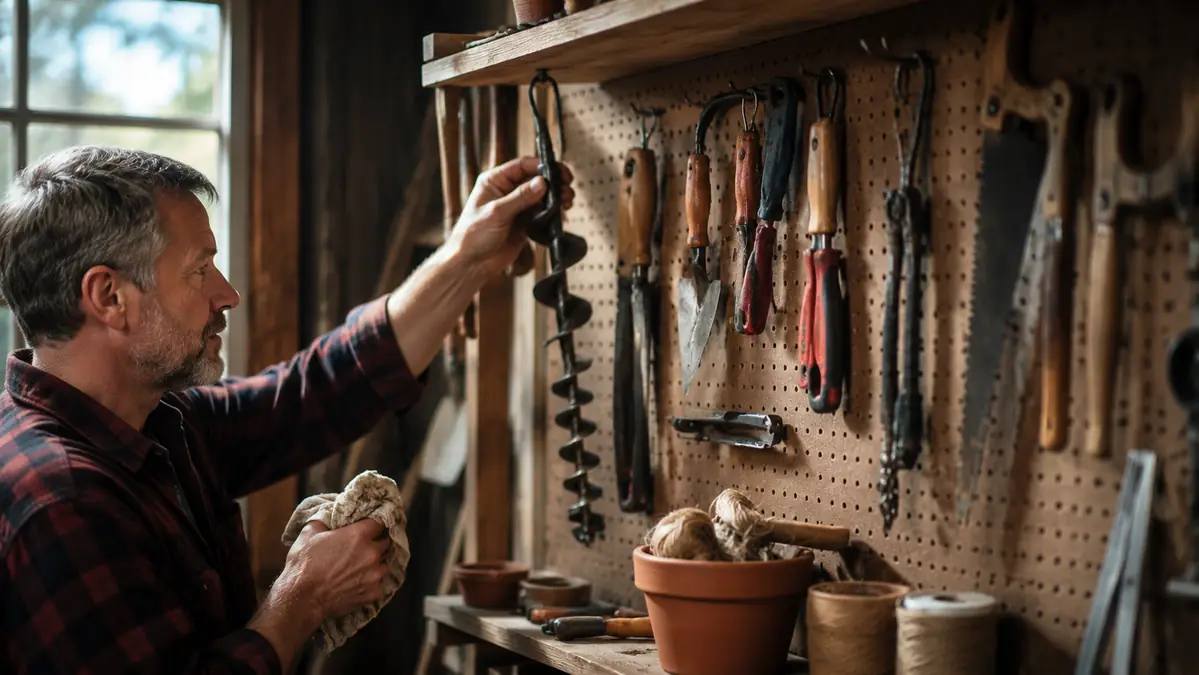
I also want to flag something about between-season storage, since it's not something anyone talks about with tools like this. I hung the auger bit on a pegboard hook in the garage over the winter both years rather than tossing it in a bucket, and it came back out each spring with no meaningful rust, just a little dust to wipe off. The one time I left it in a damp bucket for a couple of weeks by accident, it picked up faint surface rust near the tip that took some steel wool to work off. Store it dry and hanging, not sitting in a wet container, and it holds up fine season to season.
Where It Genuinely Struggled
I want to be fair about where this bit actually let me down, because an honest review needs a real con list, not a token one. The worst moment across two seasons was hitting a shallow irrigation line I'd forgotten was routed near the mailbox bed. The bit didn't puncture it, thankfully, the plastic tubing was tough enough and I felt the resistance change and stopped in time, but it was a genuine scare and a reminder that an auger bit digging blind has no idea what's a few inches below the surface. That's not a fault of the tool, it's a fault of not marking my own irrigation lines well enough, but it's exactly the kind of real-world story a demo video will never show you.
The other struggle was consistency in mixed soil. In one stretch of the front bed where sandy fill soil meets the original clay, the bit would dig beautifully for a few holes and then suddenly bog down when it hit a denser clay pocket a few inches over, with no visible difference on the surface to warn me. My drill's motor would audibly strain, and a couple of times I backed off entirely rather than risk overheating the motor or stripping the chuck connection. That inconsistency within the same bed was more frustrating than any one type of tough soil on its own, because I never knew which hole was going to fight back.
The other honest limitation is the brand itself. TCBWFY is not a company with a parts department or a lifetime warranty program the way some name-brand tool makers are. When that blade got nicked, there was no replacement tip or warranty claim to file, just steel wool and moving on. If you're the kind of buyer who wants a company you can call, or a spare parts kit sitting on a shelf somewhere, this generic import label won't give you that safety net. What you get instead is a well-reviewed, inexpensive tool that either works for your soil or it doesn't, with no brand reputation cushioning the risk either way.
The Real Time Savings, Honestly Measured
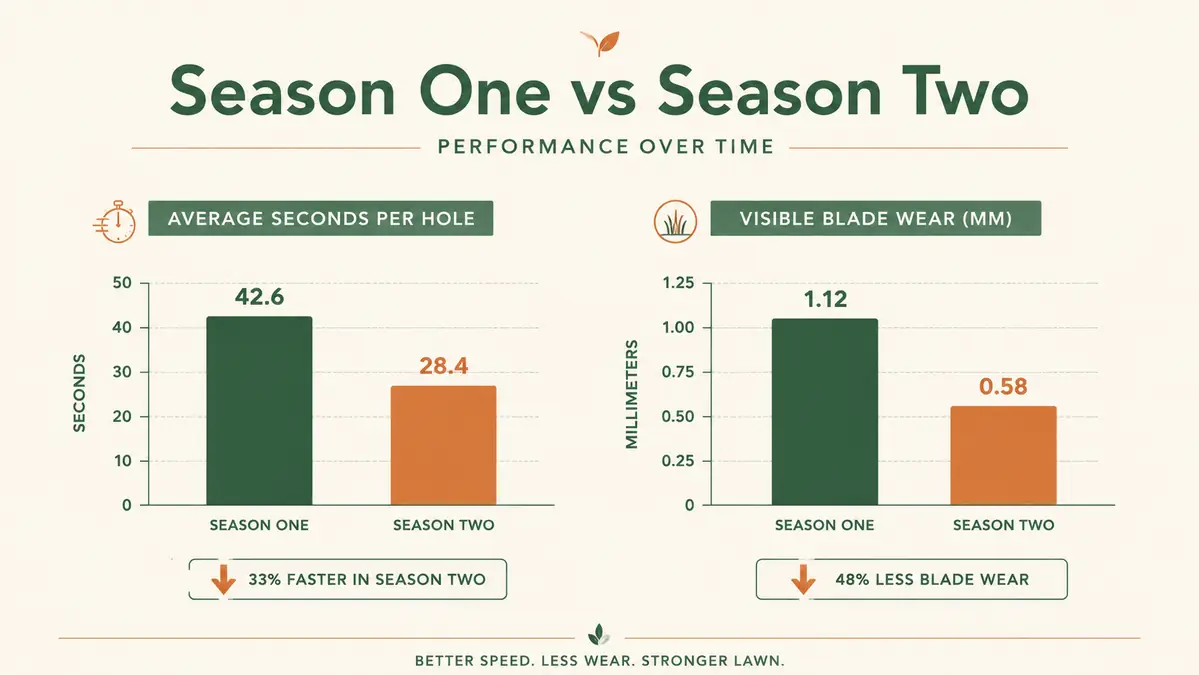
I actually timed myself for this review instead of guessing, because most reviews just say a tool is faster without ever putting a number on it. In season two I dug 20 bulb holes with the auger bit and 20 with a hand trowel in comparable soil, side by side, and wrote the times down as I went. The trowel holes averaged just under 40 seconds each once you count positioning, digging, and clearing loose dirt from the hole. The auger bit holes averaged around 6 seconds once the drill was in hand and the bit was seated, plus maybe 3 or 4 seconds to reposition between holes.
That's a real difference, not a marketing exaggeration, but I'll add the honest caveat that it doesn't include the time spent switching between drilling and actually placing bulbs by hand, which takes roughly the same regardless of how the hole got dug. For a planting day of 200-plus bulbs, the digging portion alone probably saved me somewhere in the neighborhood of two hours compared to a full afternoon with a trowel, based on that same-soil comparison. Your mileage will vary with soil type, but the gap was bigger than I expected going in.
What the stopwatch doesn't capture is the physical toll, and that's really the bigger honest takeaway after two seasons. My knees and lower back used to be sore for two or three days after a big fall planting session with just a trowel. With the auger bit doing the digging while I stayed mostly upright, that soreness is close to gone. That's worth more to me at this point than the raw minutes saved, and it's the main reason I'd buy this bit again even with the small annoyances I've laid out here.
What I Liked
- Still bites into rocky clay on contact after two full seasons and 400-plus holes
- Cut average hole-digging time from about 40 seconds by trowel to roughly 6 seconds
- Stored dry on a pegboard hook, it survived two winters with no meaningful rust
- Standard hex shaft works with any cordless drill chuck, no adapter needed
- Noticeably easier on the knees and lower back across a full planting day
Where It Falls Short
- Chuck can slip mid-hole if not tightened firmly, and nothing warns you about that upfront
- Bit can walk sideways an inch or two when starting in loose mulch or fresh compost
- Digs blind, so it's a real risk near buried irrigation lines or shallow cables
- Performance is inconsistent in mixed soil, digging easily one hole and bogging down the next
- A stray hit against buried debris can leave a small nick that slightly slows future holes
Two seasons and 400-plus holes later, the blade tip is still sharp and the shine has worn off in an honest, informative way, not a disappointing one.
Who This Is For
If you plant bulbs or bedding plants by the hundred every year, or you know your knees and wrist can't take another full afternoon of trowel work, this auger bit earns its keep across multiple seasons, not just a single flashy demo. It's also worth having if you're the type who'll actually build the habit of double-checking the chuck and storing the tool dry, since those two small habits are the difference between this bit lasting years and it being a one-season disappointment.
Who Should Skip It
If your planting is limited to a dozen bulbs in a couple of containers each year, the time this bit saves won't offset the hassle of digging it out of a drawer and finding a charged battery. And if you've got known irrigation lines, buried cables, or a septic field anywhere near your beds, either map those areas carefully first or stick to hand digging in that specific zone, since an auger bit genuinely can't tell the difference between soil and something it shouldn't be hitting.
Two seasons, 400-plus holes, and it's still the tool I reach for first.
If your fall planting day usually ends with a sore back, check today's price on the TCBWFY auger bit on Amazon before the next round of bulbs goes in the ground.
Amazon Check Today's Price on Amazon →