
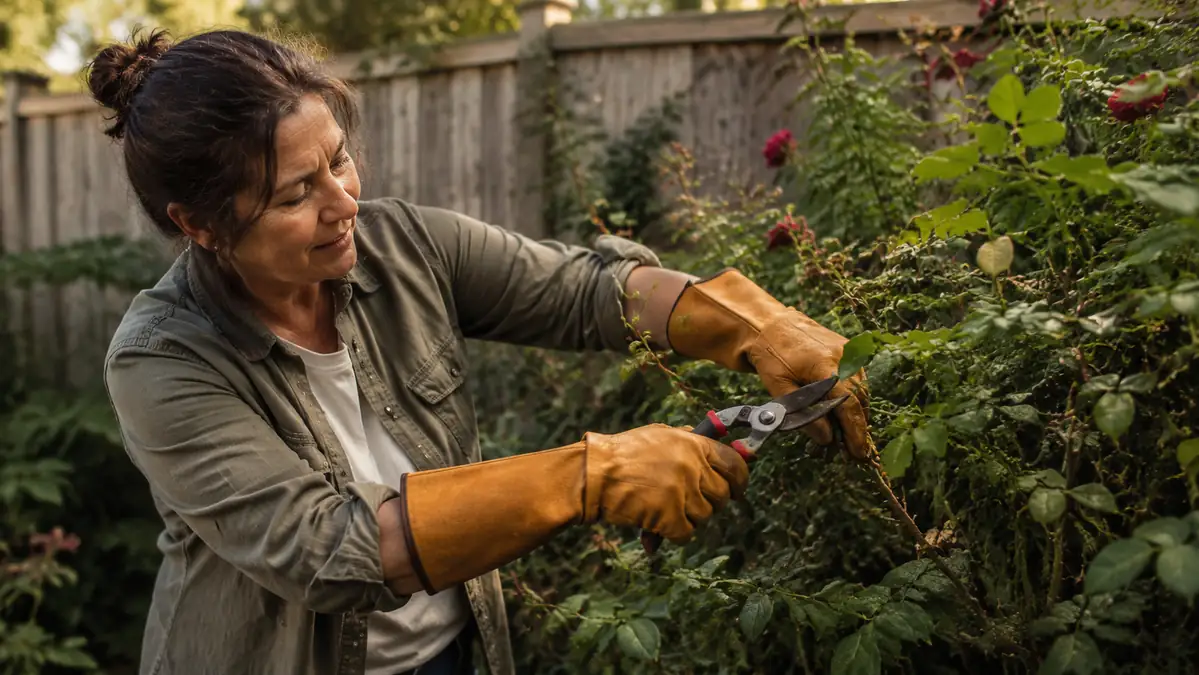
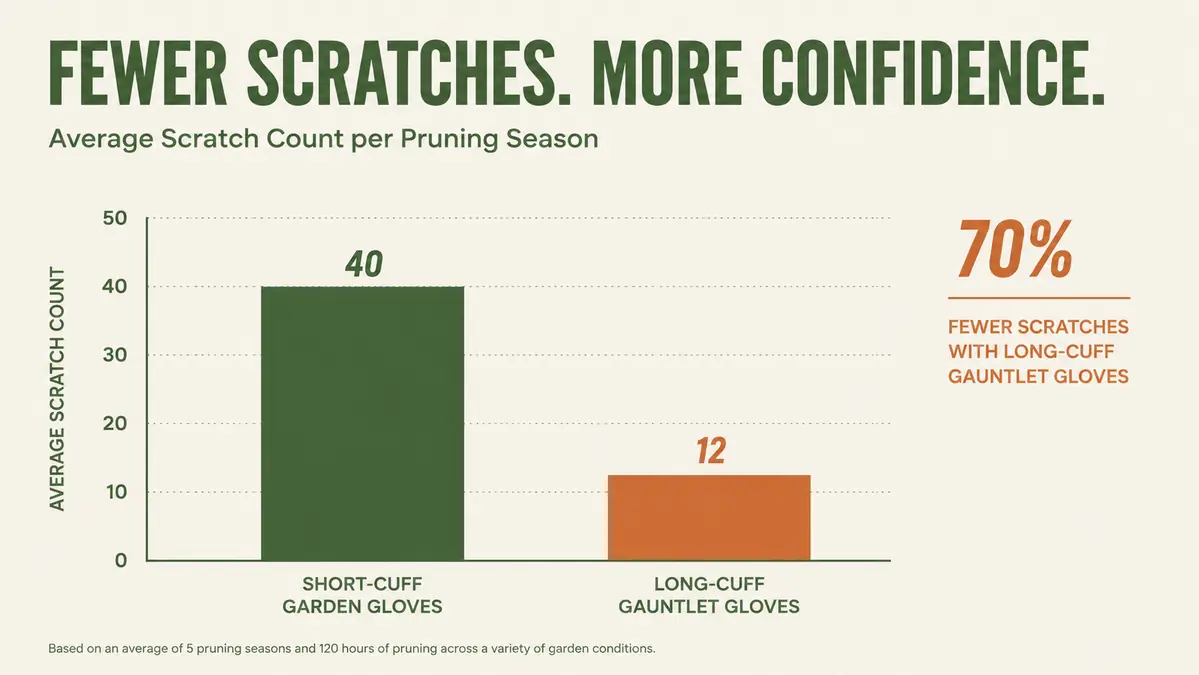
Every spring I used to end pruning day looking like I'd lost a fight with an angry cat. My Rugosa hedge and the climbing William Baffin along my back fence throw canes thick with hooked, backward-facing thorns, and for years I pruned them in a pair of thin fabric gloves that shredded by the second or third cut. The turning point was switching to gauntlet gloves, the long-cuffed leather style that covers your forearm instead of stopping at your wrist. If you've ever dragged a bare wrist across a rose cane and felt three thorns catch at once, you already understand why that extra coverage matters more than grip or dexterity.
Thorny roses don't just prick your fingertips, they rake across your wrists and forearms the moment you reach into a dense cane structure, which is exactly where ordinary garden gloves stop offering protection. This guide walks through the five steps I actually follow every February and March to prune my roses without walking away bleeding, using a pair of HANDLANDY gauntlet gloves I've now worn through two full pruning seasons. None of this requires special skill, just the right order of operations and gloves built for the job.
Your Forearms Shouldn't Pay the Price for Pretty Roses
A pair of long-cuff leather gauntlet gloves costs less than a tube of antiseptic and a box of bandages, and they'll outlast both. See today's price on the HANDLANDY gauntlet gloves I reach for every pruning season.
Amazon Check Today's Price on Amazon →Step 1: Choose the Right Gauntlet Gloves Before You Touch a Cane
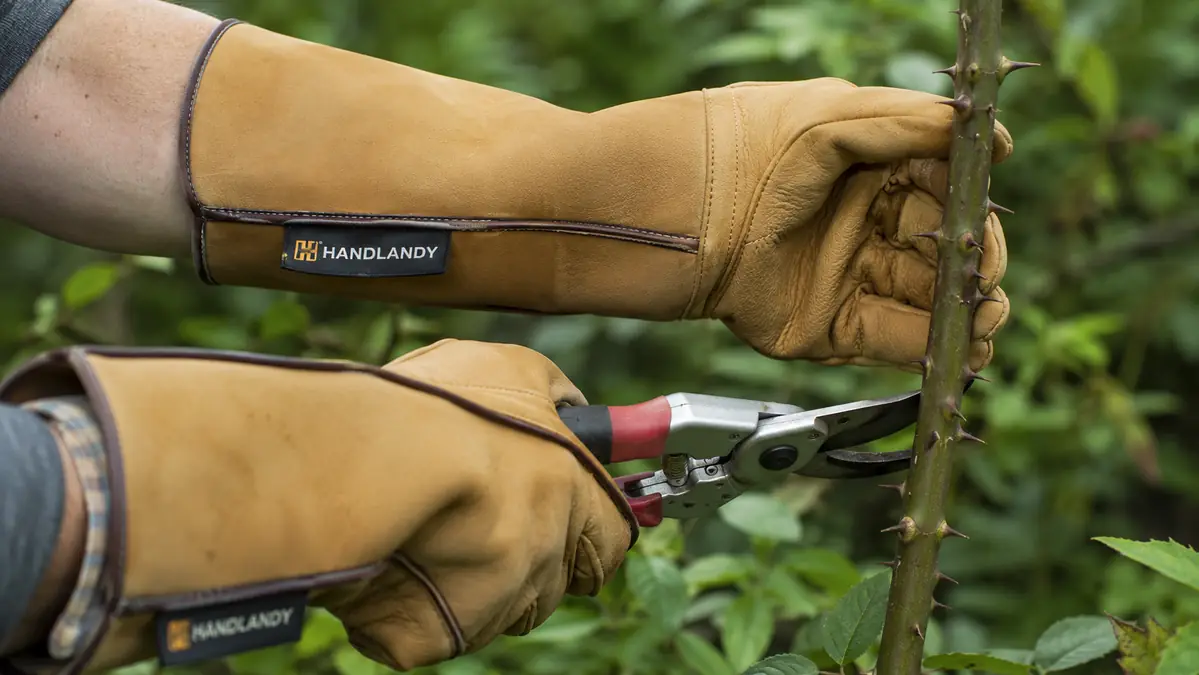
Before you make a single cut, get your hands into the right gloves. Standard garden gloves stop at the wrist bone, which is fine for weeding but useless the moment you reach past the outer canes to find an inward-facing branch buried in the center of the bush. That's where most of my old scratches happened, on the two inches of forearm skin between my glove cuff and my sleeve. Gauntlet gloves solve this by extending eight to fourteen inches up the arm, usually secured with an elastic band or a drawstring so the cuff doesn't flop open and let a cane slip underneath. Look for pigskin or goatskin leather on the palm and fingers specifically, since cowhide is stiffer and makes it harder to feel the pruner handle.
I switched to HANDLANDY's rose pruning gloves because the pigskin leather stayed breathable through warm April afternoons, and the suede gauntlet cuff is long enough to tuck under a jacket sleeve without bunching. Pigskin has a natural grain that lets air pass through the leather, so my hands weren't sweating inside them the way they did in a heavier cowhide pair I tried the season before. The stitching on the thumb and forefinger held up through two seasons of grabbing canes, snipping with bypass pruners, and dragging cut branches to the yard waste bin, no split seams yet.
Try the gloves on before pruning day, not during it. Make a fist, reach overhead, and rotate your wrist. If the gauntlet cuff rides up past your forearm or the fingers bunch at the tips, size down. A glove that fits loose at the fingertips will let a thorn find the gap between your finger and the leather, which defeats the entire purpose of gauntlet gloves in the first place.
Step 2: Inspect Your Roses and Clear a Path Before Cutting
With your gauntlet gloves on, walk the bush before you cut anything. I circle each rose slowly and look for three things: dead wood that's gray or brittle, crossing canes that rub against each other, and any cane growing back toward the center of the plant. On my Rugosa hedge this usually means marking six or seven canes mentally before I ever pick up the pruners. Because the gauntlet gloves cover my forearms, I can push aside the outer growth with my whole arm instead of just my fingertips, which is the single biggest difference from pruning in short gloves. You see more of the plant's structure when you're not flinching every time a cane brushes your wrist.
Clear loose debris, old mulch, and any fallen canes from the base first. Thorny prunings that land on the ground are a second hazard entirely, since a stray cane hidden in mulch can catch an ankle or a bare hand later. I rake this into a pile off to the side before making a single cut, so my landing zone for fresh trimmings stays clean and I'm not stepping backward into a thorn pile mid-prune.
While you're circling the bush, look past thorns for disease too. Black spot or powdery mildew shows up as dark blotches or a white coating on the leaves, and any cane showing that gets cut back to clean wood or removed entirely, thorns or not. I keep a rag dipped in rubbing alcohol nearby to wipe my pruner blades between diseased cuts, since spreading fungus from one cane to the next undoes half the benefit of pruning carefully in the first place. This is also when I decide which three or four canes will become my main structure for the season and mark them in my head before the gauntlet gloves and pruners come out for real.
Step 3: Make the Cut While Your Gauntlet Gloves Do the Reaching
This is where gauntlet gloves earn their keep. Reach into the center of the bush with your gloved forearm leading, not your bare fingers first. Use sharp bypass pruners angled at forty-five degrees, cutting a quarter inch above an outward-facing bud. Because the HANDLANDY gloves' cuff runs most of the way to my elbow, I can brace a thick cane against my forearm while I get the pruners into position, something I never would have attempted in short gloves. That bracing hand is doing real work against thorns the whole time, and it's the reason my hands used to bleed and now they don't.
Work from the outside in, removing dead and crossing wood first, then step back and look at the shape before cutting anything else. On established roses I'm rarely removing more than a third of the plant in one session. Every cane you pull free after cutting will drag across your other hand and wrist on its way out, so keep both hands gloved through this entire step, not just the hand holding the pruners. That's the mistake I made my first season, pulling free branches bare-handed because I thought the danger was only at the cutting end.
Wet canes are trickier than dry ones. Morning dew or a recent rain makes the leather grip slightly less predictable, which sounds like a small thing until you're bracing a heavy cane and your hand shifts mid-cut. I've started waiting until early afternoon on wet mornings so the canes have a chance to dry, since a slipping grip inside gauntlet gloves is still a slipping grip, leather or not. If you can't wait, dry the palm of the glove on a towel every few cuts rather than pushing through a slick grip and hoping for the best.
Step 4: Clear Cut Canes Without Getting Ambushed by Loose Thorns
Once canes are on the ground, they're still armed. A cut cane lying in the grass is arguably more dangerous than one still attached to the bush, because it's no longer anchored and can roll or shift as you gather it. Gather cut branches in bundles of four or five, gripping them in the middle where the gauntlet gloves protect your palm, and carry them thorns-down toward your yard waste bin or brush pile. I keep a stiff tarp folded near the rose bed specifically for dragging bundles across the lawn instead of carrying them, which saves the gloves some wear too.
If a cane is longer than your arm span, don't try to gather the whole thing at once. Cut it into two or three shorter sections first while it's still easy to control, then bundle the pieces. I learned this the hard way with an eight-foot climbing cane that whipped back and caught my sleeve above the gauntlet cuff, the one spot the gloves can't cover.
Don't toss thorny canes straight into a regular yard waste bag if you can avoid it. A five-foot cane can punch through a paper lawn bag from the inside on the walk to the curb, which puts the thorns right back in play for whoever's carrying it, usually me. I run mine through a small chipper when I have a big pile, or I cut everything down to eighteen-inch lengths and bundle them with twine before bagging, which keeps the ends contained and the bag from tearing open.
Step 5: Clean Up, Inspect Your Gauntlet Gloves, and Store Everything Properly
After the last cane is cleared, rinse sap and dirt off your pruners and check the gauntlet gloves for any thorns still lodged in the leather. I run a gloved hand over the palm and cuff of each glove before storing them, since a thorn tip left embedded in the leather will work its way through on the next use. HANDLANDY's palm leather has resisted punctures well through two seasons of this, but I still check every time out of habit.
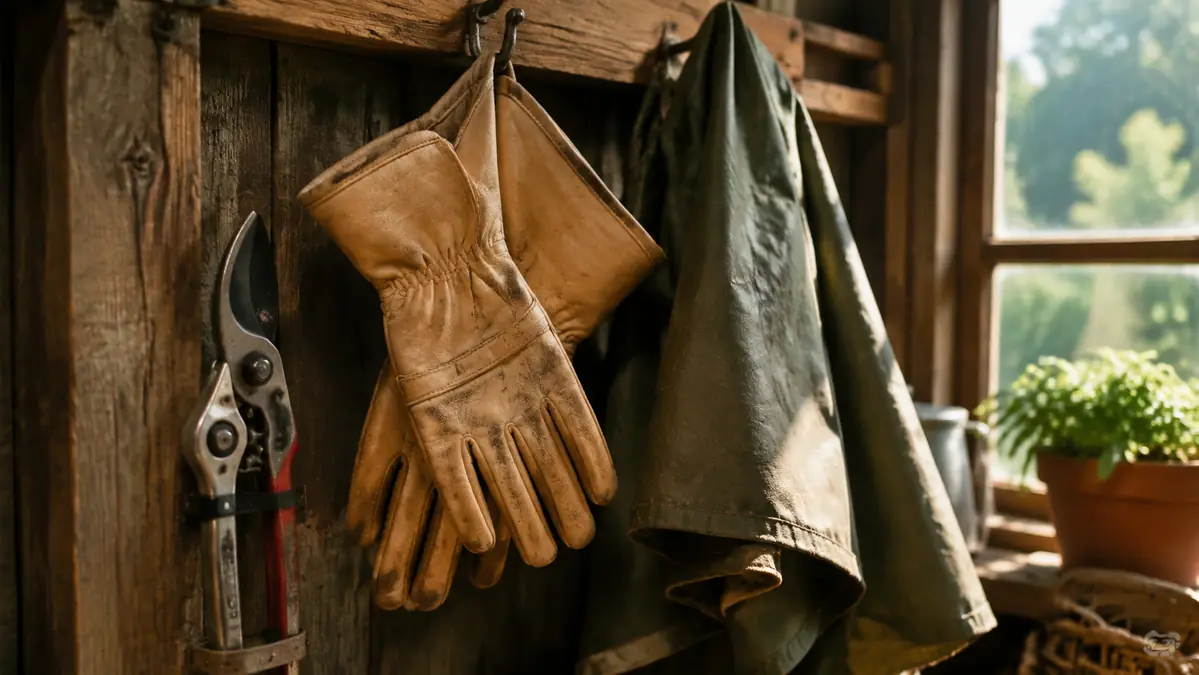
Let the gloves air dry fully before you put them away, especially if you've been sweating into them on a warm day. I hang mine on a hook just inside the garden shed rather than balling them into a bin, which keeps the leather from creasing and cracking at the knuckles. A five-minute cleanup routine like this is the difference between gloves that last two seasons and gloves that stiffen up and split by midsummer.
Every six to eight weeks during a heavy pruning stretch, I work a light coat of leather conditioner into the palm and cuff. Pigskin leather dries out faster than you'd think once it's been rinsed with hose water or exposed to morning dew session after session, and dry leather is exactly what starts to crack at the knuckles. A conditioner made for garden or work gloves, worked in with a soft cloth and left to absorb overnight, keeps the HANDLANDY pair supple enough that they still bend easily at the start of a new season instead of feeling stiff like a brand new pair all over again.
What Else Helps
Sharp pruners matter almost as much as the gloves. A dull blade crushes the cane instead of slicing it, which forces you to twist and yank, and that's when thorns catch skin that would otherwise stay clear. I sharpen mine before the first prune of the season and again halfway through if I'm working a lot of roses. Long sleeves under the gauntlet gloves add another layer of insurance, and safety glasses aren't a bad idea either, since a released branch can snap back toward your face faster than you'd expect. None of these replace the gloves, they just back them up.
Timing the prune matters just as much as the gloves you wear for it. I do my hard cutback in late winter while the plant is still dormant, right before new growth starts to swell on the buds, since cutting into active growth stresses the plant more and produces weaker canes. Deadheading through summer is a lighter task and doesn't need the same aggressive reach into the center of the bush, so some gardeners get away with shorter gloves for that part and save the full gauntlet gloves for the big late-winter and fall sessions. I just leave mine on the whole season since swapping gloves mid-task is one more thing to forget.
The gauntlet gloves don't make roses less thorny. They just make sure the thorns lose.
Prune This Season Without the Battle Scars
If you're pruning thorny roses, brambles, or anything else that fights back, a pair of long-cuff leather gauntlet gloves pays for itself the first time you reach into the center of the bush. See today's price on the HANDLANDY gauntlet gloves.
Amazon Check Today's Price on Amazon →