If you only ever buy one digging tool, the short answer is that a 4-tine spading fork and a flat digging spade solve two different problems, and most gardeners eventually end up owning both. The fork wins for breaking up compacted or rocky ground, turning compost, and dividing perennials without hacking through roots. The spade wins for clean-edged trenches, straight planting holes, and cutting a crisp line along a border. I spent one full fall dividing hostas and turning a new vegetable bed with a Truper spading fork in one hand and a standard flat spade in the other, switching back and forth job by job, and the difference showed up fast.
The Truper spading fork I tested has a 30-inch wood D-handle, four heat-treated steel tines, and a shoulder wide enough to press a boot into without your foot sliding off. It runs at today's price and has held its edge through a full season of clay-heavy digging without bending a single tine. The flat spade, by comparison, is the tool most of us grew up with, a solid steel blade on a similar handle, built for slicing rather than separating. Neither tool is complicated, but the difference in how each one meets resistance in the ground is bigger than most first-time buyers expect.
| Spec | Spading Fork | Digging Spade |
|---|---|---|
| Price | Check today's price on Amazon | Mid-range, one-time cost |
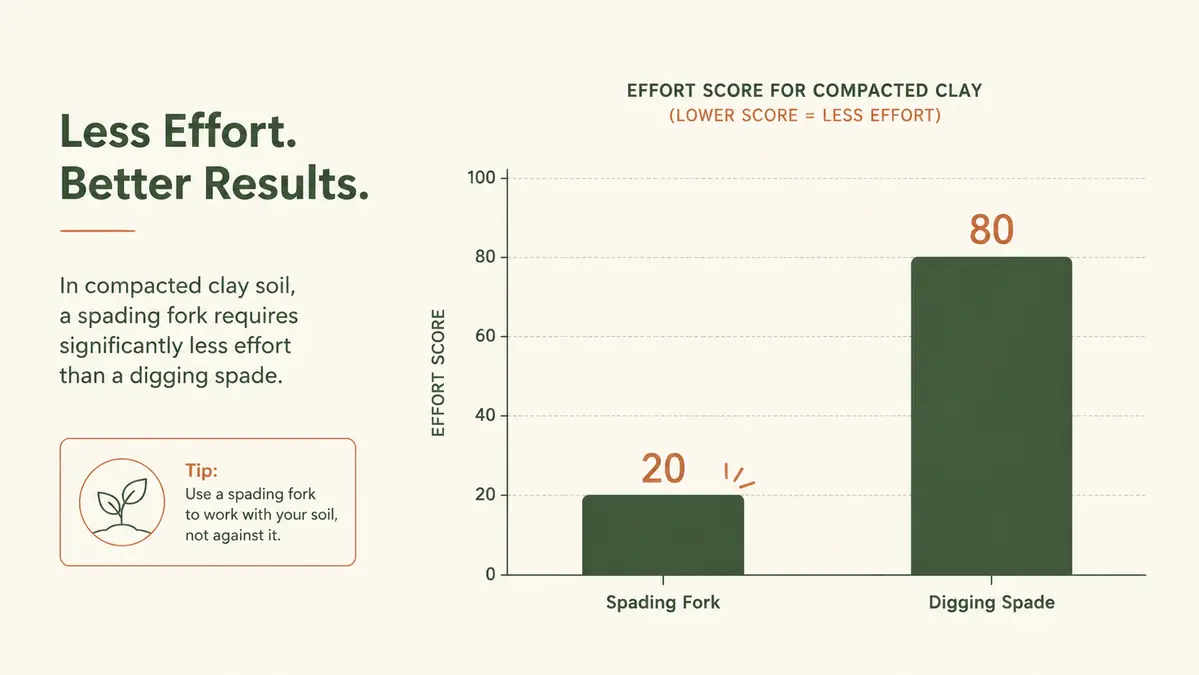
| Clay & Compacted Soil | Four narrow tines punch through hardpan with less resistance | Flat blade has to shear a full slab, fights back hard in dense clay |
| Root-Ball & Perennial Lifting | Tines slide between roots and lift the whole clump intact | Solid blade tends to slice through roots instead of separating them |
| Breaking Up Clods | Tines pass through loosened dirt and shatter clods on the pull | Flat face just pushes clods aside rather than breaking them |
| Slicing Clean Edges | Tines leave a ragged, gapped line, not built for edging | Solid blade cuts a straight, crisp edge along beds and turf |
| Compost Turning & Aeration | Tines fold and lift material without packing it back down | Flat blade compacts the pile with every scoop instead of loosening it |
| Best For | Dividing perennials, turning compost, breaking new or clay ground | Trenching, straight-sided planting holes, edging beds and paths |
| Weight & Fatigue | Tines pierce rather than push, less arm and shoulder strain per stroke | Heavier resistance per stroke in dense or rocky soil |
| Weather Sensitivity | Cuts through wet, sticky clay without much soil clinging to the tines | Wet clay sticks to the broad flat face and has to be scraped off |
Where the Spading Fork Wins
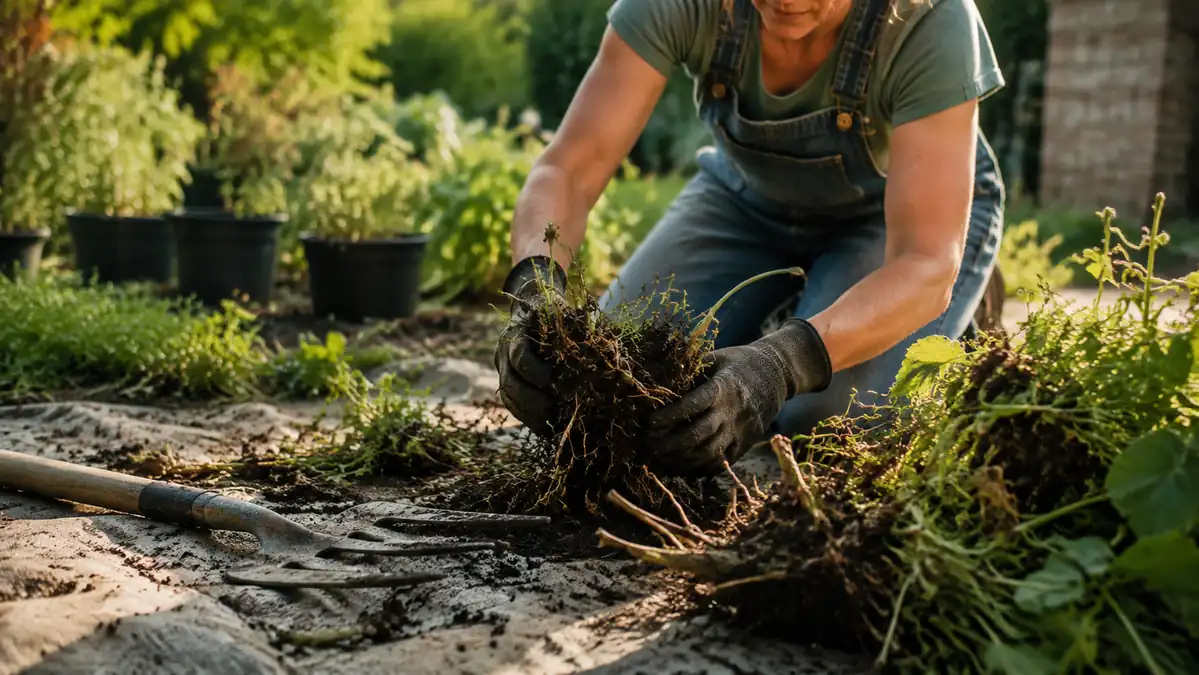
The first time I tried to divide an overgrown hosta clump with a flat spade, I sliced clean through half the root mass and lost a third of the plant. The next season I used the Truper spading fork instead, working the four tines down along the outside of the clump and rocking the handle back to loosen the soil before lifting. The tines slide between roots instead of shearing through them, so the divisions came up mostly intact, and the hosta barely sulked before putting out new growth that spring.
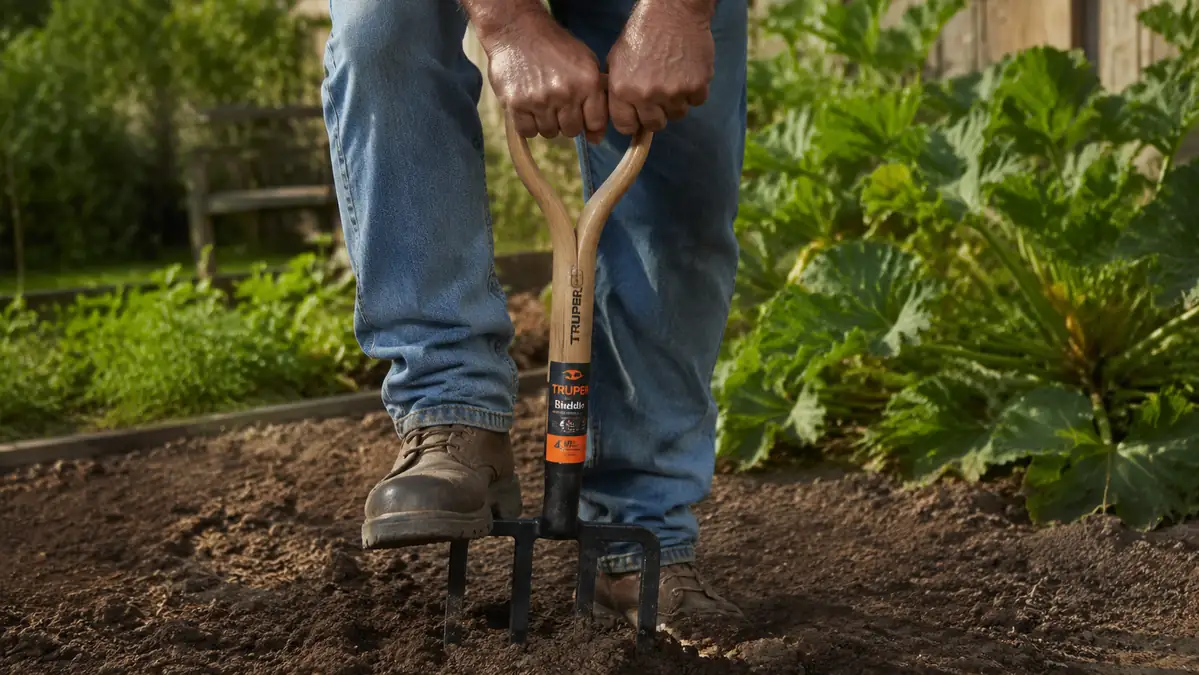
Compacted clay is the other place the fork earns its keep. My backyard has a patch near the fence line that turns to something close to brick by August, and a flat spade just bounces off it. Pressing the Truper's tines in with a boot on the shoulder step, the narrow steel punches through in a way a flat blade can't, because you're only fighting the resistance of four thin points instead of a full slab of blade. Once the tines are in, a firm pull back shatters the clod instead of just wedging it loose in one piece.
Turning compost is where the fork quietly does its best work. A flat spade tends to compact a pile with every scoop, pressing material back down instead of loosening it. The tines fold under a section of the pile and lift it, letting air into the middle without repacking the material you just turned. I turn my tumbler-free compost pile with the same Truper fork every ten days or so, and it takes maybe two minutes longer than a spade would take to make a mess of the same job.
The wood D-handle on the Truper is worth mentioning on its own. After a full season of clay digging and compost turning, it hasn't cracked, splintered, or loosened at the socket, which is more than I can say for a cheaper fork I retired two years ago. The steel tines have taken a few hits against buried rocks in that same clay patch and none of them have bent or dulled enough to notice a difference in how easily they bite into soil.
A flat spade sliced my hosta clump in half. The Truper fork slid between the roots and lifted the whole thing intact.
Where the Digging Spade Wins
None of this means the spade is obsolete. If you're cutting a straight edge along a flower bed or a new path, the flat blade gives you a clean line the fork simply can't produce. Four separated tines leave gaps and a ragged edge no matter how carefully you work, while a sharp spade blade slices through turf in one motion and leaves an edge you could run a string line along.
The spade also wins for anything that needs a straight-sided hole, like planting a tree or setting a fence post. The solid blade lets you cut a vertical wall and lift out a full scoop of soil in one motion, which is exactly what you want when you're trying to keep a planting hole's sides from crumbling in. Trying to dig a clean-walled hole with a fork just leaves you with a wider, messier opening than you started with.
Stop Fighting Compacted Clay With the Wrong Tool
If your beds turn to hardpan every August and your back is tired of losing the fight, the Truper spading fork is built for exactly that ground. Check today's price on Amazon before your next weekend of bed prep.
Amazon Check Today's Price on Amazon →Turning New Ground: A Real Comparison
I broke a new 10 by 12 foot vegetable bed into sod one October, splitting the job down the middle between the two tools to see how they'd actually compare. On the half I worked with the flat spade, I had to lean my full weight onto the blade for almost every thrust, and the clay underneath the sod fought back the whole way. On the half I worked with the Truper fork, the tines punched through the same clay with noticeably less resistance, and breaking up the clods afterward took a fraction of the effort because the tines could pass back through loosened dirt instead of pushing it aside.
The spade did win one part of that job. Once the ground was loosened, I switched back to it to cut the final bed edge into a straight line against the lawn, something the fork's four separated tines just can't do cleanly. That split, fork for breaking ground, spade for finishing the edge, ended up being the exact workflow I've used on every new bed since. It took me a couple of seasons to land on that rotation, but once I did, bed prep stopped feeling like a fight and started feeling like two short, specific jobs back to back.
Dividing Perennials Without Losing Half the Plant
Beyond hostas, I've used the same Truper fork to divide daylilies, ornamental grasses, and a stubborn clump of Siberian iris that had outgrown its spot along the back fence. In every case the process is the same: work the tines in a circle around the outside of the root mass, rock the handle to loosen the soil grip, then lift the whole clump and let the tines separate natural divisions rather than cutting new ones by force. A spade forces you to guess where to slice, and guessing wrong means losing growth you were trying to save.
The one exception is anything with a single, dense taproot rather than a fibrous clump, like a young shrub you're transplanting. There, a spade's clean cut is actually the safer choice, since a fork's tines can shred a taproot instead of sliding past it. Knowing which root structure you're dealing with before you grab a tool saves a lot of second-guessing in the moment.
Cost and Long-Term Value
On price alone the two tools land in roughly the same neighborhood, and neither one is a purchase you'll agonize over. The bigger cost difference shows up down the road, in how often you're back at the store replacing a bent tine or a cracked handle. Cheaper forks I've owned before the Truper had thinner, stamped tines that started to splay outward after a single season of clay work, which made them nearly useless for the exact job they were meant to do. Solid, heat-treated steel tines cost a little more up front but they're the reason the fork still bites straight into the ground instead of glancing off at an angle.
A flat spade's cost calculus is simpler because there's less to fail. A quality forged blade holds an edge for years with nothing more than an occasional file pass, and the wood handle is usually the first thing to go on either tool. If you're buying on a budget and can only justify one purchase this season, weigh which failure mode matters more to you, a fork that can't hold its shape in heavy clay, or a spade that dulls and starts tearing turf instead of cutting it.
What About a Border Fork or a Mattock
Before settling on the Truper, I tried a smaller border fork, the kind with a narrower head meant for tight spaces between established plants. It was fine for detail work but too light-duty for breaking new ground or dividing anything larger than a small perennial. A mattock, with its heavy pick-and-blade head, handles rocky or root-choked soil the fork can't touch, but it's overkill and exhausting for routine bed prep, and it's not built for the lifting and separating work a fork does well.
For most home gardeners, the standard 4-tine spading fork sits right in the sweet spot between those two extremes: sturdy enough for clay and compacted ground, precise enough for dividing perennials, and light enough to use for an hour without your shoulders giving out. It's the tool I reach for first, with the spade close behind for anything that needs a clean edge.
Who Should Buy Which
If your soil is heavy clay, you're regularly dividing perennials, or you turn your own compost, the Truper spading fork is the tool that will get used the most and complained about the least. It handles the jobs that punish a flat spade, and it does them with less strain on your back and shoulders over a long afternoon. If your main jobs are cutting bed edges, digging straight-sided planting holes, or trenching for irrigation line, a flat digging spade is still the right first purchase.
Most gardeners who do both kinds of work end up owning one of each, and that's honestly the setup I'd recommend if your budget allows it. But if you can only add one tool to the shed this season and your ground fights you every time you break new soil, the spading fork is the one that earns its keep the fastest.
The Tool That Actually Beats Compacted Clay
A flat spade bounces off hardpan. The Truper spading fork's four tines punch through it. See today's price on Amazon and give your back a break this season.
Amazon Check Today's Price on Amazon →